
Ford F-150 Years to Avoid (and the Best Ones to Buy)
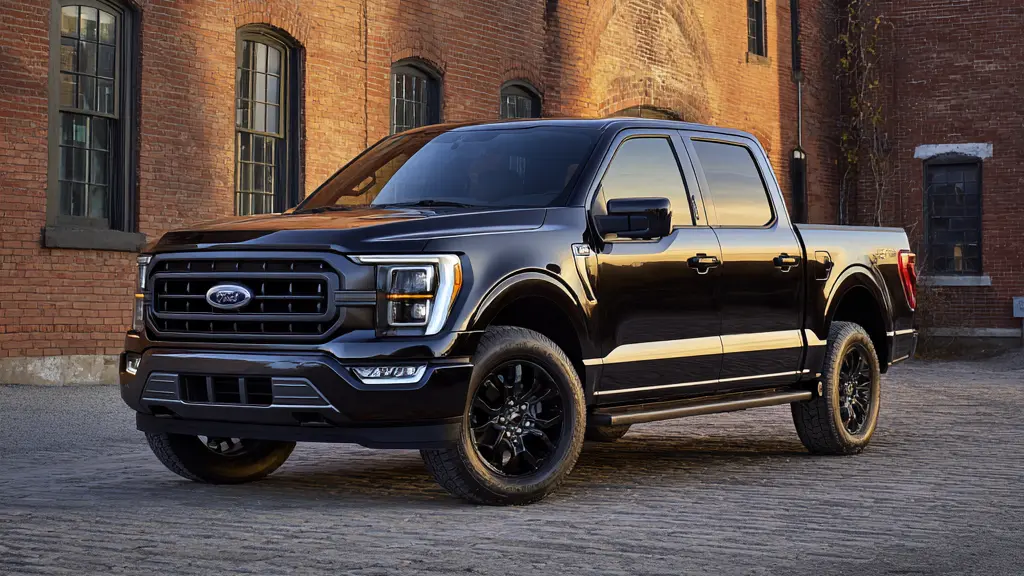
The F-150 has been America’s best-selling truck for more than four decades. Ford builds a lot of them, so they’re common at salvage auctions, with prices varying by model year, condition, and demand.
Still, used F-150 buyers should pay close attention to the transmission. The issue has affected multiple model years, and Ford recalled nearly 1.4 million trucks in April 2026 over a gearshift problem.
That doesn’t make the F-150 a bad buy. It makes knowing the specific year and powertrain essential.
Here’s what the data actually shows.
Key Takeaways
- Ford recalled 1,392,935 F-150s from 2015–2017 equipped with the 6R80 six-speed automatic transmission under NHTSA recall No. 26V237, filed April 14, 2026, for unintended downshifts into second gear.
- The remedy is a PCM calibration update. Trucks that logged specific diagnostic codes before the software update also receive a no-charge lead frame replacement under an extended warranty program.
- NHTSA escalated its earlier probe to Engineering Analysis EA26001 on January 30, 2026. As of April 2, 2026, Ford had logged 316 Vehicle Owner Questionnaires, 444 warranty claims, 121 field reports, and 105 customer service reports across 891 VINs, with two injuries and one accident.
- Ford TSB 19-2365 covers excessive oil consumption on 2018–2020 trucks with the 5.0L V8, defined as more than one quart per 3,000 miles.
- Cam phaser coverage under Customer Satisfaction Program 21N03 expired January 1, 2023. A 2017–2020 truck with a 3.5L EcoBoost may now require the owner to pay the full repair cost.
- Equipment Recall 25SB3 (NHTSA 25E-070) covers about 34,481 remanufactured 10R80 transmissions, but the inspection remedy applies only within 8,000 miles of installation.
- Best model years to consider: 2009–2010 for budget simplicity, 2013–2014 for a proven powertrain, and 2021 or newer for a modern truck.
Quick Summary: Best and Worst F-150 Years
| Status | Model years | Main issue or strength |
| Avoid | 2004–2008 | 5.4L Triton V8: spark plugs, cam phasers, and timing chains |
| Avoid | 2018 | Highest recorded powertrain complaint count; 10R80 transmission failure and oil consumption |
| Caution | 2011–2014 | Multiple downshift-related recalls; early EcoBoost carbon buildup |
| Caution | 2015–2017 | Recall 26V237 for unintended downshifts — verify completion |
| Caution | 2019–2020 | Oil consumption TSB still applies; ten-speed transmission improvements |
| Best | 2009–2010 | Revised 5.4L, simple steel-body truck, and low price |
| Best | 2013–2014 | 5.0L Coyote with a mature six-speed; last years of the steel body |
| Best | 2021+ | Improved ten-speed calibration and modern safety tech |
The Transmission Story: 2011 Through 2017
This issue spans multiple F-150 model years, and it’s clearer as one story than year by year.
The 6R80 six-speed can downshift without warning or driver input. Sometimes that causes a temporary rear-wheel lockup, which at highway speeds can lead to skidding or loss of control.
2011–2014 trucks were subject to four separate safety recalls. In June 2024, Ford recalled over 550,000 model-year 2014 trucks in the U.S. specifically. The most severe scenario involved a downshift from sixth gear to first.
2015–2017 had a related but distinct problem. NHTSA opened Preliminary Evaluation PE25002 on March 21, 2025, covering roughly 1,270,970 trucks after 138 complaints. On January 30, 2026, the agency elevated it to Engineering Analysis EA26001.
Ford filed recall 26V237 on April 14, 2026, covering 1,392,935 trucks built between March 12, 2014, and August 18, 2017.
The cause is specific. Thermal cycling and vibration degrade electrical connections in the transmission lead frame over time. That degradation corrupts the signal from the Transmission Range Sensor to the PCM, and a faulty signal can trigger an unintended downshift — at worst, sixth to second.
The remedy is a PCM calibration update. The new software gives the control system more time to recognize failing TRS hardware before commanding the shift. If a truck logged certain diagnostic trouble codes before the software was installed, the dealer also replaces the lead frame under a corresponding extended warranty program. Both are free.
One warning sign to watch for: some trucks show an illuminated check engine or wrench light as the sensor degrades.
What this means if you’re bidding. VINs became searchable on April 15, 2026, and Ford mailed remedy notification letters between July 13 and 17, 2026. Run any 2015–2017 six-speed truck through NHTSA’s recall lookup and check whether 26V237 was completed. If it wasn’t, the fix is free at a Ford dealer — just budget the trip. Ten-speed trucks from 2017 are not covered by this recall.
The Years to Avoid
2004–2008
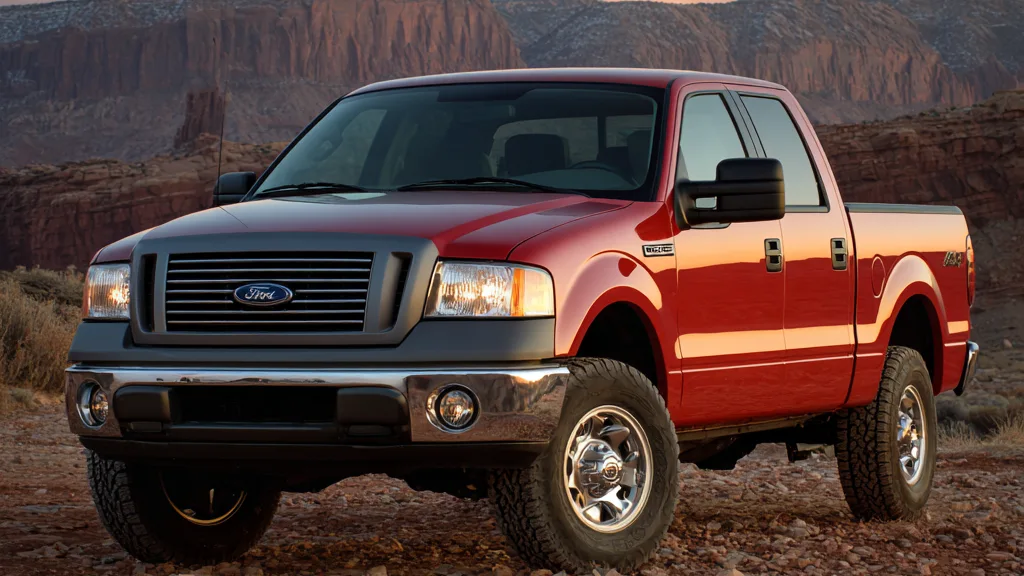
The 5.4L three-valve Triton V8 has three failure modes, each with potentially expensive repairs.
Spark plugs seize in the aluminum cylinder head and snap off during removal. What should be a routine tune-up turns into an extraction job, and a broken plug can mean pulling the head.
Cam phasers rattle, then fail, throwing off engine timing. Timing chain guides and tensioners can also wear out.
Add corroding gas tank straps on some trucks, and you have a generation where the question isn’t whether you’ll spend money, but when.
Verdict: Skip these. The purchase discount may not cover the engine work.
2018
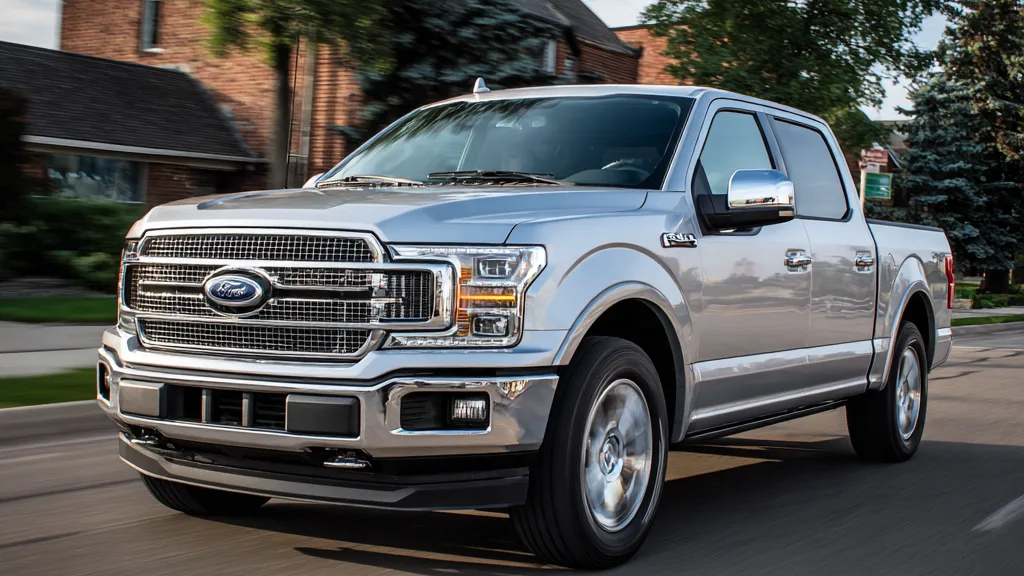
Third-party aggregation of NHTSA data lists 744 powertrain complaints for the 2018 F-150, the highest raw count among F-150 model years in that dataset.
Two problems stand out:
- Ford TSB 18-2274 addresses harsh and bumpy upshifts, downshifts, and engagement on 2018 trucks with the 10R80 built on or before May 15, 2018, across the 2.7L, 3.5L, and 5.0L engines. The prescribed remedy is a PCM reprogram. Transmission specialists separately report CDF drum wear as a hardware failure mode on this unit, though Ford’s bulletin addresses shift quality through software rather than naming a mechanical cause.
- Ford TSB 19-2365 covers excessive oil consumption on the 5.0L V8 in 2018–2020 trucks — more than one quart per 3,000 miles with no visible leaks. Ford traced it to high intake manifold vacuum during deceleration fuel shutoff, pulling oil past the rings. The fix is a PCM reprogram, a new oil level indicator, and an oil change.
One useful exception: the 3.3L V6 retained the six-speed in 2018. If you want a truck from this year, that configuration sidesteps the ten-speed.
Verdict: Avoid the 2018 5.0L unless you have documentation that the engine was replaced or the TSB work was done.
The Most Reliable F-150 Years
2009–2010
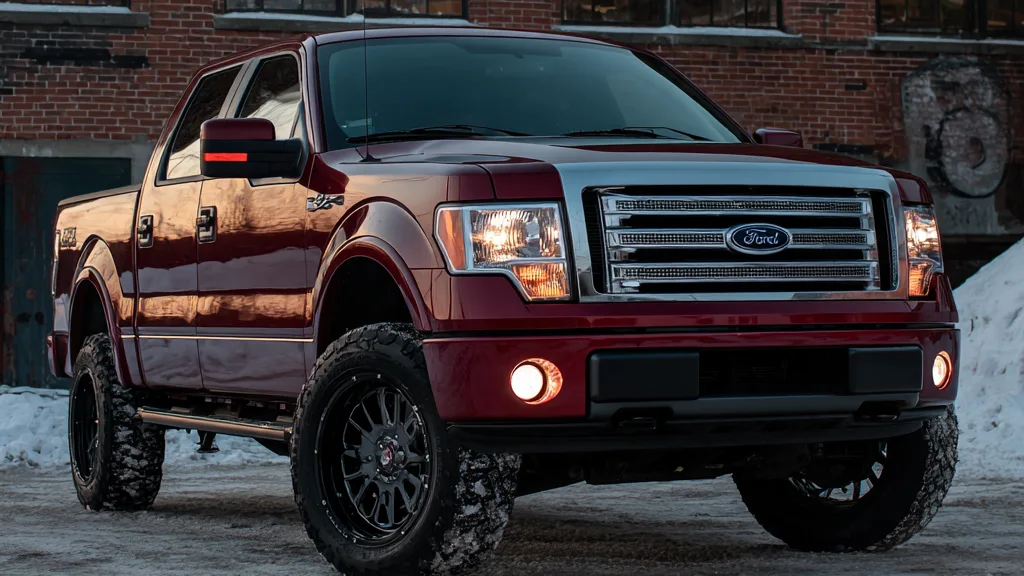
Ford revised the 5.4L during these years, and the worst spark plug and phaser problems became less common. This is a straightforward steel-body truck with no turbos, no direct injection, and no ten-speed.
Parts are cheap, most shops can work on them, and auction prices are low.
Verdict: The best Ford F-150 years if you want something simple and don’t need modern features.
2013–2014
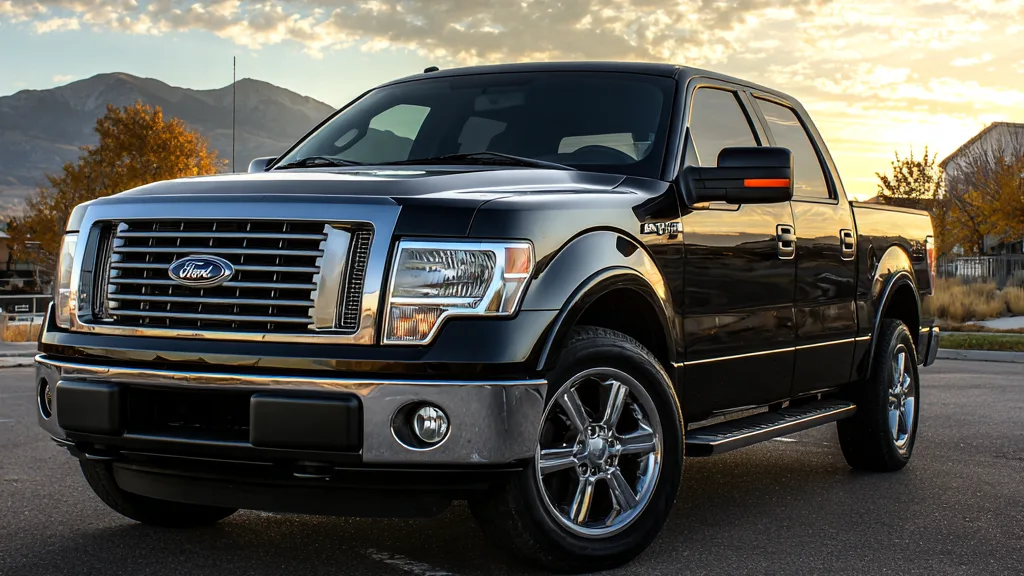
The 5.0L Coyote V8 paired with the 6R80 is a well-regarded combination in the twelfth generation. Owners routinely report getting well past 150,000 miles with basic maintenance.
Two caveats. The 2014 trucks fall under that June 2024 recall, so verify it was completed. And the early 3.5L EcoBoost from 2011–2014 has its own issues with carbon buildup on the intake valves and intercooler condensation causing misfires — the V8 is the safer pick in this range.
Verdict: The sweet spot for a steel-body truck, provided the recall is checked.
2021 and Newer
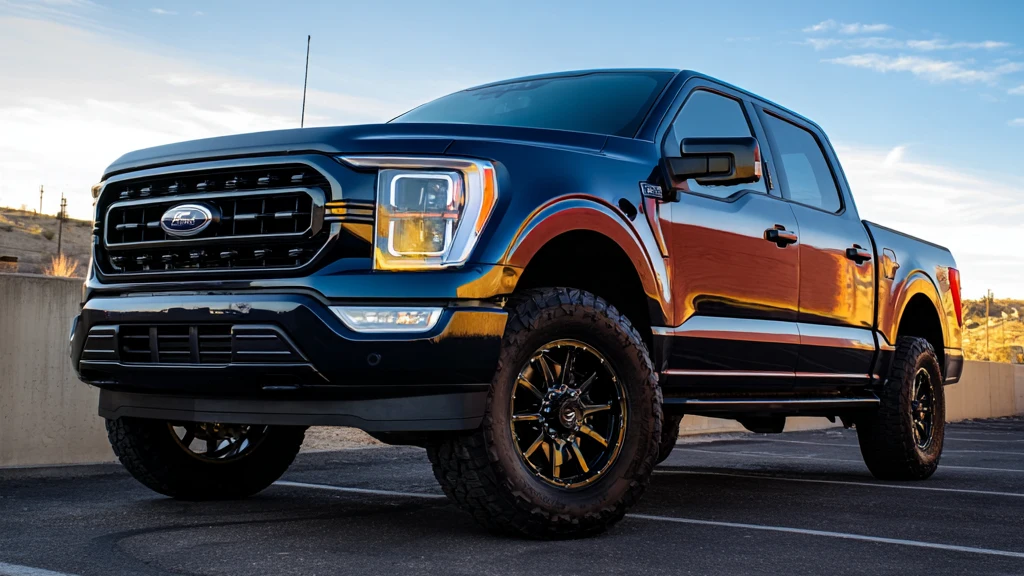
By 2021, Ford had worked through most of the ten-speed calibration problems, and 5.0L oil consumption improved in later production. You also get an aluminum body, which doesn’t rust like steel.
While Ford continued issuing bulletins for harsh or delayed ten-speed engagement on trucks built into 2022, complaint volume drops noticeably.
Verdict: The best choice if you want current safety tech and can stretch the budget.
Picking the Right Engine
| Engine | Years to target | Years to avoid | Note |
| 3.3L V6 | 2018+ | — | Naturally aspirated, no turbos; paired with a six-speed in 2018 |
| 5.0L Coyote V8 | 2013–2017, 2021+ | 2018–2020 | Oil consumption TSB covers 2018–2020 |
| 2.7L EcoBoost | 2018+ | 2015–2017 | Second generation addressed first-generation carbon buildup issues |
| 3.5L EcoBoost | 2015–2016 | 2017–2020 | Cam phaser failures |
| 5.4L Triton V8 | None | All | Avoid regardless of model year |
The 3.5L EcoBoost Cam Phaser Problem
The 3.5L EcoBoost in 2017–2020 trucks can develop cam phaser wear that starts as a rattle at cold start and can progress to engine damage.
Ford handled it through customer satisfaction programs. Program 21B10 was a PCM reprogram. Program 21N03 extended cam phaser warranty coverage for certain 2017–2020 F-150s with the 3.5L GTDI engine, plus 2018–2020 Expedition and Navigator models. A later supplement added the Raptor and Limited variants the original terms excluded.
That coverage expired January 1, 2023. While it ran, it was prorated by mileage — Ford paid 100% under 70,000 miles, dropping to nothing at 90,000 — and required the 21B10 reflash to have been done by February 28, 2022.
CarComplaints data shows 279 engine complaints logged for the 2017 F-150, with failures averaging around 37,465 miles. That’s a third-party aggregate rather than a federal finding, but the pattern is consistent across owner reports.
Listen for a rattle at cold start on any 3.5L. That’s the warning sign, and catching it early can help limit repair costs.
What to Check Before You Bid
1. Run the VIN for open recalls. This matters particularly on the F-150 because of recall 26V237. NHTSA’s lookup is free, and a ClearVin report adds title and damage history. Check both.
2. Watch for remanufactured transmissions. Equipment Recall 25SB3 (NHTSA 25E-070) covers about 34,481 remanufactured 10R80 transmissions built between May 30, 2020, and June 13, 2025, used as replacement parts in 2017–2021 Ford and Lincoln vehicles. A missing T10 bearing can misalign the park pawl and parking gear, so the transmission won’t hold Park.
The remedy has a strict limit: dealers inspect and replace the transmission only on vehicles with 8,000 miles or less since installation. If service records show a transmission replacement, find out which unit was installed and how many miles it has covered since.
3. Check the oil level indicator on 2018–2020 5.0L trucks. Part of Ford’s TSB fix was replacing the dipstick itself. A truck that received the full remedy should have the updated indicator and a reprogrammed PCM.
4. Inspect the frame on pre-2015 trucks. Steel-body F-150s from road-salt states across the Midwest and Northeast develop frame rust. Study the undercarriage photos for scaling and perforation around the rails and suspension mounts. Surface oxidation on a fifteen-year-old truck is normal. Metal loss is not.
5. Know what aluminum changes. From 2015 onward, the F-150 has an aluminum body. It resists rust, which is a genuine advantage in salt country, but body repair requires shops with separate tooling and a dedicated work area. Price the bodywork before you bid.
6. Confirm the transmission in the listing. A 2017 truck could have either the 6R80 or the 10R80 depending on configuration, and that detail determines which transmission-related issues to check for.
Many F-150s at auction carry branded titles. Our article “A Salvage Title: What Is It?” explains what that means for registration and insurance in your state.
FAQ
What is the best Ford F-150 to buy used?
For a steel-body truck, the 2013–2014 5.0L Coyote with a six-speed is the strongest combination, with the 2014 recall verified. On a tighter budget, 2009–2010 offers simplicity at a low price. For a modern truck, 2021 or newer puts you past the worst of the ten-speed problems.
What Ford F-150 years should I avoid?
Avoid 2004–2008 because of 5.4L Triton engine problems, and 2018 because of ten-speed transmission issues and 5.0L oil consumption. For 2015–2017 six-speed trucks, confirm recall 26V237 was completed.
Is the 5.4L Triton V8 a reliable engine?
No. Spark plugs can break off in the cylinder head, cam phasers can fail, and timing chain components can wear out. These repairs are expensive and often happen at the same time.
What are the common problems with the 2018 F-150?
It has 744 powertrain complaints, the highest of any model year. The 10R80 ten-speed drew a TSB for harsh shifting, and the 5.0L V8 falls under a separate TSB for consuming more than a quart of oil per 3,000 miles.
What is the best F-150 engine in terms of reliability?
The 5.0L Coyote V8 is a strong choice, outside the 2018–2020 oil-consumption window. The 3.3L V6 is also worth considering — naturally aspirated, no turbos, and in 2018 it came with the six-speed instead of the ten-speed.
Should I buy a 2015–2017 F-150 with the six-speed or ten-speed?
Either works, but check the recall. Ford recalled nearly 1.4 million 2015–2017 trucks equipped with the 6R80 six-speed automatic transmission under NHTSA campaign 26V237 (Ford campaign 26S28) for unintended downshifts. The remedy is a free PCM update at a dealer. Run the VIN through NHTSA’s lookup and confirm it was done. Ten-speed trucks from 2017 aren’t covered by this recall.
Final Thoughts
The F-150 is a good truck with one major weak point: transmission problems across a long stretch of model years.
Target: 2013–2014 with the 5.0L for a steel-body truck. 2009–2010 if the budget is tight. 2021 or newer for something current.
Avoid: 2004–2008 entirely, and 2018 with the 5.0L.
Verify before bidding: recall 26V237 completion on 2015–2017 trucks, which transmission the truck actually has, frame condition on pre-2015 models, and oil consumption on any 2018–2020 5.0L.
Get those checks right, and a clean-title or salvage F-150 is one of the easier trucks to own. Parts are everywhere, most shops are familiar with them, and resale stays strong.
Curious how the auction process works for first-time buyers? AutoBidMaster customer reviews cover real experiences from people buying used vehicles at auction.
Know which F-150 years to target? Search Ford F-150 listings at AutoBidMaster and find your next truck to repair, rebuild, or own.
Sources (accessed October 2026):

- How Copart Auctions Work in Arkansas: 2026 Buyer’s Guide - November 13, 2026
- Daniel Mac’s 1987 BMW E30 Convertible Is Heading to Auction - November 9, 2026
- Buying Copart Vehicles in Montana: A Private Buyer’s Guide - November 3, 2026