
Types of Car Engines: A Brief Overview
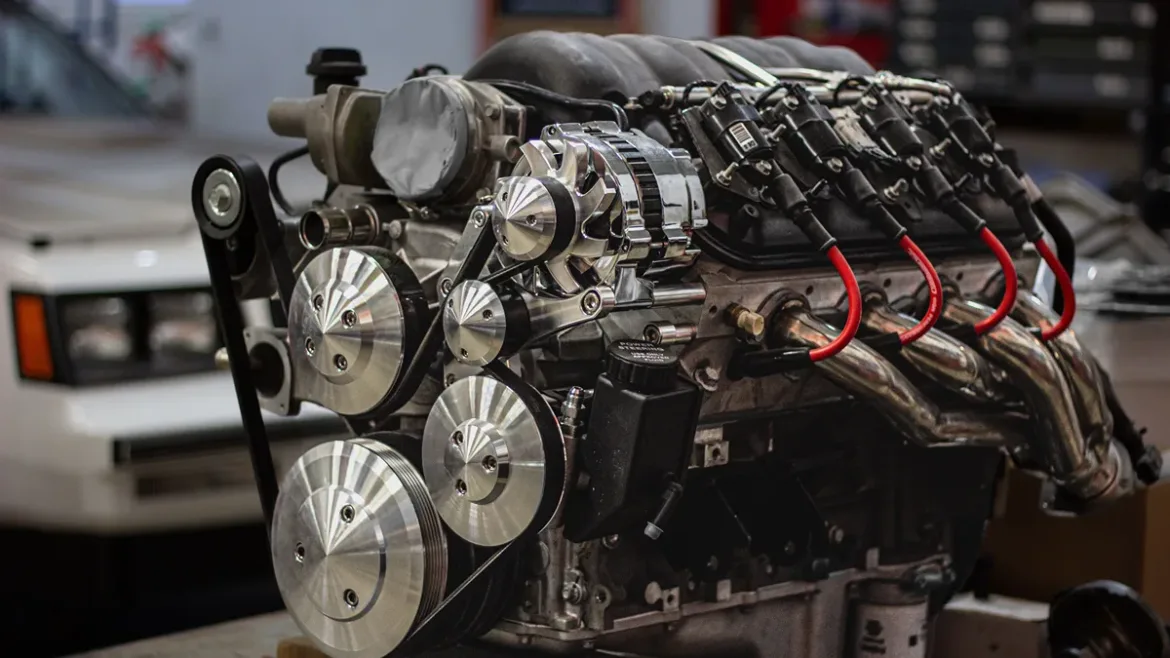
You’ve probably seen terms like V6, inline-four, turbocharged, or hybrid while shopping for a car. If you’re not a car enthusiast, it’s easy to wonder what all those letters and numbers actually mean.
There’s no single engine type that works for every driver. Some buyers care most about fuel efficiency, while others want more power or a particular driving feel. That’s why automakers have developed so many different engine designs over the years.
In this guide, we’ll look at the main types of car engines and explain what makes each one different.
Brief Overview of Car Engine Types

At a basic level, modern vehicles fall into three broad categories:
- Internal combustion engines (ICE)
- Hybrid powertrains
- Electric powertrains
Internal combustion engines burn fuel inside the engine to produce power. Hybrid vehicles combine an internal combustion engine with electric motors and a battery, while fully electric vehicles rely on electric motors and electrical energy stored in a battery.
Most cars have traditionally used gasoline or diesel engines, but hybrid and electric powertrains have become increasingly common. For the rest of this article, we’ll focus mainly on the different ways internal combustion engines can be designed and classified.

A hybrid powertrain combines an internal combustion engine with electric assistance. Depending on the vehicle, the electric motor, battery, or both can work alongside the combustion engine. Fully electric vehicles work differently: they use electric motors to turn electrical energy into motion.
Car Engine Types According to Number of Strokes

When engines are classified by the number of strokes, there are two main types: two-stroke and four-stroke engines.
Four-stroke engines are by far the more common of the two in modern passenger cars. A four-stroke engine completes its combustion cycle through four stages: intake, compression, combustion, and exhaust.
| Engine type | Combustion cycle |
|---|---|
| Two-stroke | Completed in two piston strokes |
| Four-stroke | Completed in four piston strokes |

In a two-stroke engine, the piston completes the cycle in just two movements, while a four-stroke engine takes four. Two-stroke engines were more common in older vehicles and are now much less common in passenger cars.
Most modern passenger vehicles, from Audi A4s to Porsches and Ferraris, use four-stroke engines.
Car Engine Types According to Ignition Method

Another way to classify engines is by how the fuel is ignited. Here, there are two main options: spark ignition and compression ignition.
Spark Ignition
In a spark-ignition engine, a spark plug ignites the air-fuel mixture inside the combustion chamber. This is the typical setup for gasoline engines.
Spark plugs can also be used in engines designed to run on other fuels, including CNG, hydrogen, nitromethane, and LPG.
Compression Ignition

Diesel engines use a different approach. Instead of relying on a spark plug, they compress air until it reaches a high temperature. Fuel is then introduced into the combustion chamber, where it ignites because of the heat created by compression.
Car Engine Types According to Air Intake Methods

There’s another way to tell engine types apart: look at how they get air into the combustion chamber. From this perspective, engines are either naturally aspirated or use forced induction.
Naturally Aspirated Engines
With a naturally aspirated engine, air enters the combustion chamber without the help of a turbocharger or supercharger. The engine relies on atmospheric pressure to draw air in.
Naturally aspirated engines are still found in a variety of vehicles, including some high-performance models. One characteristic drivers may notice is the direct and predictable response to throttle input, without the delay sometimes associated with turbocharged engines.
Forced-Induction Engines

Forced induction takes a different approach. Instead of relying solely on atmospheric pressure, the engine uses a device to push more air into the combustion chamber. More air allows the engine to burn more fuel and can increase power.
There are two main types of forced induction:
- Turbochargers use exhaust gases to spin a turbine, which compresses incoming air.
- Superchargers are mechanically driven by the engine, usually through a belt.

The biggest difference is how they are powered. A turbocharger uses exhaust gases, while a supercharger is connected directly to the engine. Turbochargers can improve an engine’s power and efficiency, while superchargers are known for delivering boost without the same type of turbo lag.
Some engines use more than one turbocharger. The exact setup varies by manufacturer and model, from single-turbo engines to more complex twin- or quad-turbo configurations.
Car Engine Types According to Cylinder Layout

Engine layouts can also be classified by the way the cylinders are arranged. The main configurations include:
- Inline
- V-shaped
- W-shaped
- Flat, also known as boxer
- Rotary
Inline Configuration

Inline engines have all their cylinders arranged in a single row. It’s a simple and widely used layout, especially in everyday passenger cars.
You’ll find inline engines in everything from commuter cars such as the Toyota Corolla to performance-oriented models such as the Mercedes-AMG A 35.
Straight Configuration

A straight engine is essentially an inline engine, with the cylinders arranged in a single line from front to back. Straight-six engines, for example, have all six cylinders positioned in one row.
This layout has appeared in both older vehicles and modern cars, including many BMW models.
V-Configuration

The name gives away the basic idea. Viewed from the front, the two banks of cylinders form a shape similar to the letter “V.”
This layout makes it possible to fit more cylinders into a relatively compact engine. V-shaped engines are common in vehicles where performance or towing capacity is a priority.
W-Configuration

W-shaped engines are much less common than inline or V-shaped designs. They use multiple banks of cylinders connected to a common crankshaft.
The configuration has appeared in several forms over the years. Today, W engines are most closely associated with a small number of premium models, including the Bentley Continental GT and Audi A8.
Flat Engines

Flat engines, also called boxer engines, have cylinders positioned horizontally opposite one another. This arrangement keeps the engine relatively low, which can help lower the vehicle’s center of gravity.
Porsche and Subaru are two manufacturers particularly associated with boxer engines.
Rotary Engine

Rotary engines stand apart from the other designs on this list because they don’t use conventional pistons. Instead, a triangular rotor moves inside a specially shaped housing to produce power.
Final Thoughts
There are several ways to classify a car engine, from the number of strokes it uses to its ignition method, air intake system, and cylinder layout. Understanding these basic differences can make vehicle specifications easier to read and help you compare different models.
If you’re researching a specific vehicle, a VIN lookup can also tell you more about its engine and other factory specifications. A window sticker by VIN or car VIN lookup can be useful starting points.
It’s also worth looking at the engine together with the drivetrain and other vehicle specifications. These details give you a better picture of how a vehicle is configured and what to expect from it.
If you’re looking for a vehicle with a particular engine type, AutoBidMaster provides access to vehicles listed through online auctions. Each lot page includes available information about the vehicle’s specifications and condition.

- The Advantages of Salvage Car Parts - November 3, 2025
- Buying Salvage Cars: What to Expect on Auction Day - May 22, 2025
- Is Buying a Hail-Damaged Car Worth It? A Detailed Guide - December 2, 2024