
Auction Rules and Buying Tips for Georgia
When you’re planning to bid on vehicles at auction in Georgia, it’s important to understand not only what state law allows, but also how auctions actually work for public buyers. Georgia is more accessible than many states, but that access depends heavily on title type and on using the right buying structure.
This Behind the Bid guide explains how auction buying works in Georgia, which vehicles public buyers can bid on, and why working with a licensed broker like AutoBidMaster is the most reliable way to participate — especially when clean-title vehicles are involved.
Public Buyers and Auction Access in Georgia
Georgia law does not require a dealer license simply to participate in vehicle auctions. However, auction operator rules still apply, and those rules determine whether a public buyer can bid directly or must go through a broker.
In practice:
- Salvage-title vehicles are often open to public buyers
- Clean-title vehicles typically require a licensed broker for non-dealers
While Georgia is often described as “public-friendly,” clean-title access is where many buyers run into limitations. Auction platforms such as Copart restrict clean-title bidding to licensed dealers or approved brokers. This is where AutoBidMaster plays a critical role.
Don’t miss out on great deals. Sign up for free and start bidding in minutes.
Why Use AutoBidMaster When Bidding in Georgia
AutoBidMaster is not just a workaround for access — it is the required and compliant path for many Georgia auction purchases.
When you bid through AutoBidMaster, you benefit from:
- Broker-approved access to clean-title vehicles
- Verified eligibility before bidding, reducing post-sale issues
- Secure handling of payment, paperwork, and title transfer
- Clear guidance on Georgia-specific post-auction requirements
Rather than navigating auction rules on your own or risking a canceled transaction, AutoBidMaster ensures your bid complies with both auction policies and Georgia regulations from the start.
Salvage Titles and Driving Restrictions

Georgia allows public buyers to purchase salvage vehicles, but it is strict about what happens after the sale.
If you buy a salvage-title vehicle in Georgia:
- It cannot be driven on public roads
- It cannot be registered or insured
- It must be transported from the auction location
To legally return a salvage vehicle to the road, you must:
- Complete all required repairs
- Pass a state-mandated rebuilt inspection
- Apply for and receive a rebuilt title
Only after these steps can the vehicle be registered and legally driven.
Clean-Title Vehicles: Where Brokers Matter Most
Clean-title vehicles follow standard registration rules once purchased, but non-dealers cannot usually bid on them directly through major auction platforms.
This is the most common misunderstanding among first-time Georgia buyers. While salvage vehicles may be open to the public, clean-title units generally require a broker. AutoBidMaster provides that access while also managing documentation, payment timelines, and title processing — areas where mistakes can quickly become costly.
Georgia Rebuilt Title Costs: What the Numbers Look Like
Georgia publishes clear, state-mandated fees for converting a salvage title into a rebuilt title. These costs apply regardless of where the vehicle was purchased.
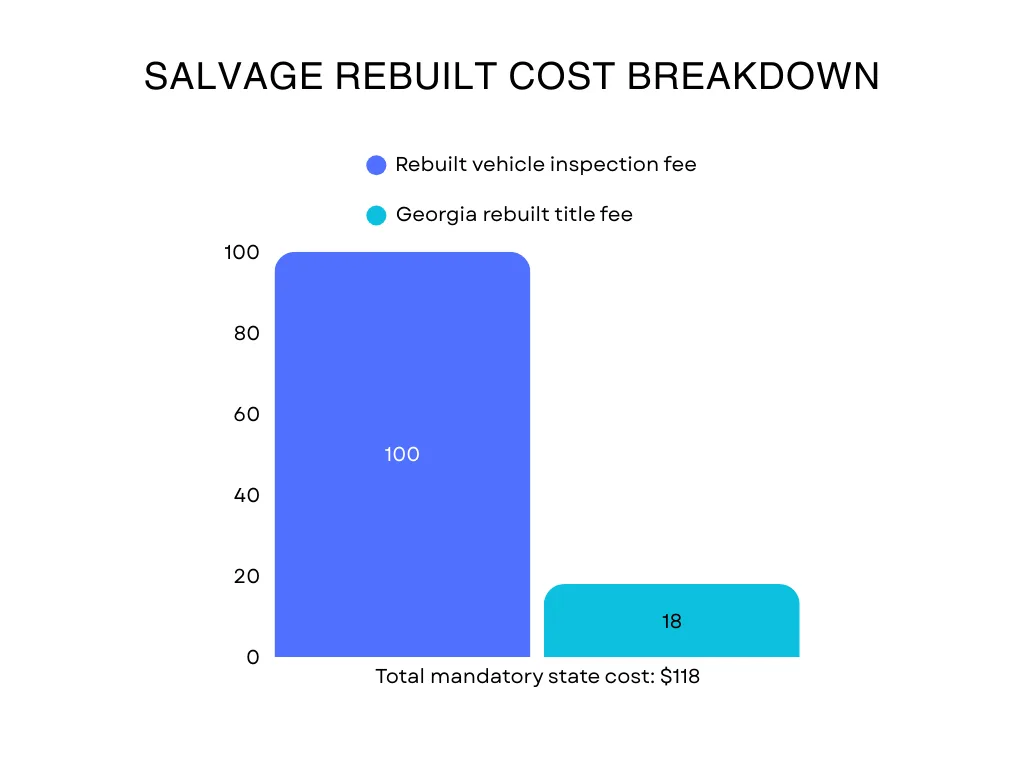
Georgia Salvage Rebuilt Cost Breakdown
- Rebuilt vehicle inspection fee: $100
- Georgia rebuilt title fee: $18
- Total mandatory state cost: $118
If a vehicle fails inspection, the $100 fee applies again for each reinspection. These fixed costs make budgeting easier, but they also reinforce that buying a salvage vehicle is only the first step. Transport, repairs, inspection, and title issuance must all be completed before road use is legal.
Pros and Cons of Buying at Auction in Georgia
| Pros ✅ | Cons ❌ |
| Salvage vehicles often open to public buyers | Clean-title vehicles require a broker for non-dealers |
| Strong auction inventory across vehicle types | Salvage vehicles must be transported |
| Predictable rebuilt inspection costs | Rebuilt inspections add time and cost |
| State and municipal surplus vehicles available | Some listings remain dealer-only |
Frequently Asked Questions
Do I need a dealer license to bid at auctions in Georgia?
Not always. Salvage vehicles may be open to the public, but clean-title vehicles typically require a licensed broker.
Why can’t I bid on clean-title cars directly?
Auction operator rules restrict clean-title bidding to licensed dealers or brokers. This is separate from Georgia state law.
Can AutoBidMaster help me buy clean-title vehicles?
Yes. AutoBidMaster provides broker access, handles compliance, and manages the transaction from bid to title transfer.
Can I drive a salvage vehicle home after purchase?
No. Salvage vehicles must be transported and rebuilt before they can be driven legally.
Can out-of-state buyers bid in Georgia auctions?
Yes, but they must follow Georgia title rules and their home state’s registration requirements.
Sources (accessed December 2025):
- Georgia Department of Revenue – Motor Vehicle Services
- Georgia Department of Administrative Services – Surplus Property Program
- Official auction operator guidelines (Copart)
- Georgia motor vehicle title and salvage statutes
Join AutoBidMaster for free — create your account and start bidding on cars, trucks, motorcycles, and more.

- What to Know Before Bidding on Vehicles in Pennsylvania - January 20, 2026
- Most Sought-After Used Car Brands in the USA in Recent Years - January 14, 2026
- Making Sense of Vehicle Bidding in North Carolina - January 14, 2026