
Types of Car Transmissions: Guide for Salvage Auction Shoppers
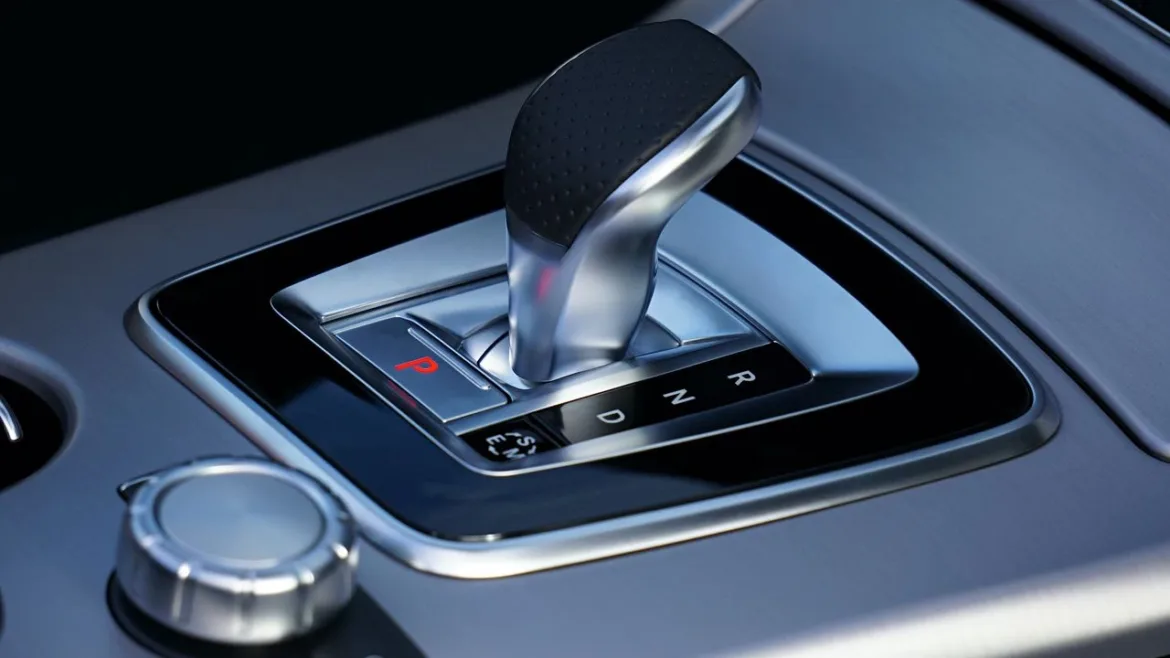
Table of Contents
- Key Takeaways
- Manual Transmission
- Automatic Transmission
- Continuously Variable Transmission
- Dual-Clutch Transmission
- Automated Manual Transmission
- Single-Speed Reduction Gear
- Salvage Transmission Risk Matrix
- What “Run and Drive” Means
- 5 Transmission Red Flags in Auction Listings
- Why Vehicle History Matters Before You Bid
- Which Transmission Type Is Right for You?
- FAQ
- Bottom Line
Scroll through any salvage auction listing, and you’ll see the transmission type listed alongside the mileage and damage code. It’s easy to skim past, but that’s a mistake. The transmission affects both the scope of potential repairs and how much you can learn about the vehicle before placing a bid.
Some transmissions handle neglect and accident damage better than others. Some are relatively simple to repair, while others are sealed units where a single major failure often means replacing the entire transmission. Knowing the difference can help you evaluate a listing more accurately and set a realistic maximum bid.
This auction car transmission guide explains the main transmission types you’ll encounter at salvage auctions, the problems each is most likely to have after an accident, and how to evaluate one using auction listing details and available vehicle history reports.
Key Takeaways
- Manual transmissions are the simplest to inspect and repair, which makes them one of the lowest-risk options for buyers with limited mechanical experience.
- CVTs are typically sealed systems; any visible transmission fluid leak is a serious warning sign.
- Flood damage affects transmission types differently. Water intrusion in a CVT or DCT often requires replacement rather than repair.
- A “Run and Drive” designation confirms the vehicle moved under its own power when it arrived at the auction yard, not that it will do so on pickup day.
- Dual-clutch transmissions offer strong performance but often require specialized tools and expertise that many independent repair shops don’t have.
- Electric vehicles typically use a single-speed reduction gear with few moving parts and relatively few mechanical failure points, though the surrounding electronics and drivetrain components carry their own risks.
Manual Transmission
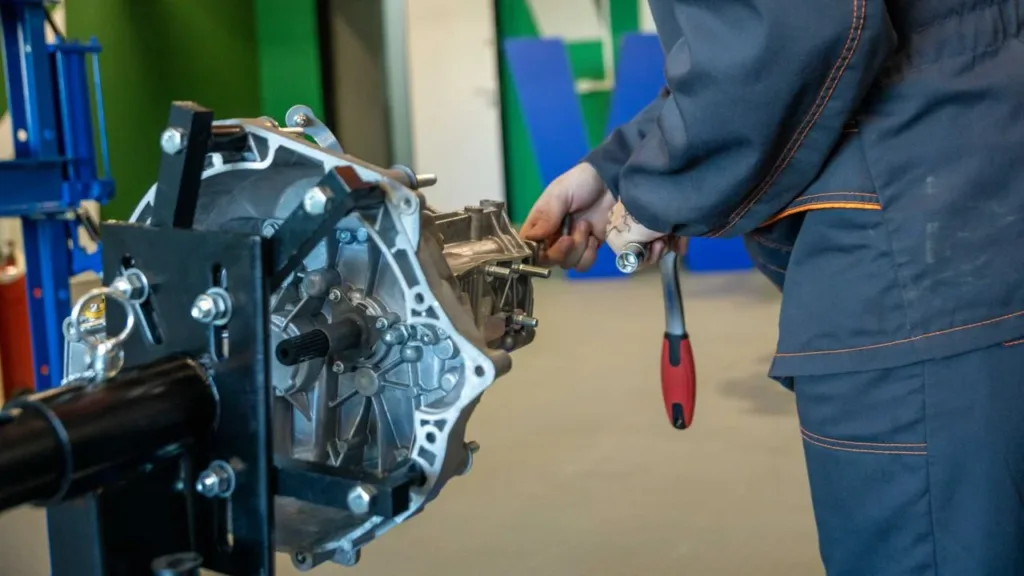
A manual transmission connects the engine to the wheels through a clutch operated by the driver. It has fewer moving parts and a design that has changed relatively little over the past several decades.
For salvage buyers, that simplicity is its biggest advantage. A manual gearbox is easier to inspect visually, can be disassembled by most independent repair shops, and can often be rebuilt using widely available parts. When problems develop, they typically appear gradually and produce noticeable symptoms rather than causing sudden, complete failure.
Things to watch for when buying a salvage car with a manual transmission:
- Clutch wear, a common failure point that is usually relatively affordable to repair
- Bellhousing damage, which may be visible in undercarriage photos
- Shifter linkage damage, particularly on vehicles with front-end impact
- Grinding or gear engagement issues noted in the condition report
Manual transmissions are also less common in today’s vehicle inventory, as most manufacturers have shifted to automatic transmissions. That scarcity can work in your favor at auction, since demand for manual-equipped vehicles is often lower than for comparable automatic models.
Best suited for: Project vehicle enthusiasts and buyers who want a transmission that can be evaluated more easily before placing a bid.
Automatic Transmission
The traditional automatic transmission uses a torque converter and a set of planetary gears to shift without driver input. It remains the most common salvage car transmission type, largely because it has been the standard choice in North American vehicles for decades.
Conventional automatic transmissions are familiar to nearly every repair shop in the country. Rebuild kits are widely available, used OEM parts are easy to source, and diagnostic procedures are well established. That accessibility makes it easier to estimate repair costs when evaluating a damaged vehicle.
Common issues found in salvage vehicles with automatic transmission:
- Fluid contamination from a cracked cooler line or radiator damage
- Torque converter damage after a severe front-end impact
- Overheating caused by cooling system damage
- Delayed engagement, slipping, or shifting issues noted in the auction description
A useful detail to know: automatic transmission fluid is typically red or reddish-brown. In yard photos, check the ground beneath the vehicle and the area around the transmission pan for signs of leakage. A dark stain in that area deserves attention before placing a bid.
Best suited for: Most general-purpose buyers, including those planning to repair and resell the vehicle.
Continuously Variable Transmission
A CVT uses a belt or chain that runs between variable-width pulleys instead of fixed gear ratios. The result is smooth acceleration and improved fuel efficiency, which is why manufacturers have widely adopted them in compact cars and crossovers.
The tradeoff becomes clear when problems develop. CVTs are typically sealed systems designed for limited servicing, and internal repairs are often not practical. Many repair shops replace the entire unit rather than rebuild it.
CVT problems in salvage cars center on a few patterns:
- Fluid leaks. Because most systems are sealed, any visible leak may indicate a breach that should be taken seriously.
- Slipping. The engine revs while the vehicle accelerates slowly, often indicating belt or pulley wear.
- Shuddering during acceleration. This can indicate the transmission is struggling to maintain smooth engagement.
- Whining or grinding. These sounds may point to internal wear or component damage.
- Overheating. Excessive heat can break down the fluid and accelerate internal damage.
Flood damage deserves particular caution with CVTs. Water intrusion into a sealed CVT often means replacement rather than repair. If a listing shows water damage as the primary or secondary damage code and the vehicle is equipped with a CVT, factor the possibility of a full replacement into your repair cost estimate.
That said, CVT reliability varies significantly by manufacturer and model. Honda and Toyota CVTs have earned relatively strong reputations when maintained properly, with fluid service intervals often falling between 25,000 and 40,000 miles.
Best suited for: Buyers targeting vehicles with light cosmetic damage and strong CVT reliability records.
Dual-Clutch Transmission
A dual-clutch transmission (DCT) uses two separate clutches:
- One for odd-numbered gears
- One for even-numbered gears
This design enables extremely fast shifts and is commonly found in performance-oriented and European vehicles.
DCT reliability is generally good in properly maintained vehicles, but the salvage context introduces additional challenges. These transmissions rely on precise mechatronic control systems, and diagnosis often requires manufacturer-specific tools that many independent shops lack. Finding a qualified repair shop can take longer than finding replacement parts.
What to consider before bidding on a DCT vehicle:
- Clutch pack wear, which is a normal wear item but typically more involved to repair than a manual clutch
- Mechatronic unit faults, often indicated by hesitation, jerky shifts, or rough engagement
- Whether a qualified DCT specialist operates in your area
- Availability of used OEM replacement units for that specific model
DCT vehicles can represent strong value at auction precisely because fewer buyers pursue them. That discount is real, but it exists for a reason, so always confirm your repair options before placing a bid.
Best suited for: Experienced buyers with access to a specialist familiar with the specific transmission.
Automated Manual Transmission
An automated manual transmission (AMT) is essentially a manual gearbox with actuators that control clutch operation and gear changes. It is commonly found in budget-oriented vehicles and some commercial applications.
Mechanically, a car with an AMT shares many components with a conventional manual transmission, which makes the internal design familiar to many repair shops. The main failure points are typically the actuator system and electronic controls rather than the gearset itself.
Shift quality is generally less refined than other automatic transmission types, which can limit resale appeal. For buyers focused on function, that lower demand can create an opportunity at auction.
Best suited for: Budget builds and buyers prioritizing low acquisition costs.
Single-Speed Reduction Gear
Electric vehicles don’t need multiple gear ratios because electric motors deliver usable torque across a wide operating range. As a result, most EVs use a single-speed reduction gear.
From a mechanical standpoint, this is the simplest transmission arrangement on the list. It has very few moving parts, no torque converter, no clutch packs, and minimal fluid requirements.
The complexity shifts elsewhere. In a salvage-title EV, the main areas of concern are the battery pack, inverter, and high-voltage systems rather than the drive unit itself. Water intrusion and impact damage to the battery pack are the primary risks, and both require specialized inspection and assessment.
Best suited for: Buyers with access to EV-specific repair resources, particularly those targeting vehicles with damage limited to body panels.
Salvage Transmission Risk Matrix
| Transmission | Repair Complexity | Parts Availability | Shop Access | Skill Level |
| Manual | Low | Excellent | Widely available | Beginner |
| Automatic | Moderate | Excellent | Widely available | Beginner to intermediate |
| AMT | Moderate | Good | Broad availability | Intermediate |
| CVT | High | Moderate | Limited for internal repairs | Intermediate |
| DCT | High | Moderate | Specialist required | Advanced |
| Single-speed EV | Low mechanically | Limited | EV specialist required | Advanced |
What “Run and Drive” Means
This is one of the most misread labels in the auction world. Understanding it precisely can save you money.
Copart defines Run and Drive narrowly: at the time the vehicle arrived at the yard, staff verified that it started, could be put into gear, and could move forward under its own power. That is the full scope of the designation.
It doesn’t mean the vehicle will start on pickup day. Batteries can die, fluids can leak, and the vehicle’s condition can change while it sits outdoors between arrival and sale.
A related designation, Engine Start Program, confirms only that the engine started and ran at idle. It doesn’t provide information about transmission operation.
IAA uses a different standard. Its Run & Drive designation confirms that the engine started and idled, that forward and reverse engaged, and that the steering wheel completed a full rotation in each direction. The forward-and-reverse check provides slightly more information about transmission function than Copart’s equivalent designation.
Neither label is a warranty. Both are single-point observations made during vehicle processing, and buyers accept vehicles as-is once they leave the auction yard.
5 Transmission Red Flags in Auction Listings
Before bidding, work through this list:
- Fluid stains beneath the transmission area. Look at ground photos and undercarriage shots. Red or reddish-brown fluid may point to a transmission leak.
- Damage codes involving the drivetrain. Undercarriage, mechanical, and rear-end damage codes require closer inspection than cosmetic front-end damage.
- Flood or water damage on a sealed transmission. For CVTs and DCTs specifically, this usually means replacement.
- A missing or visibly damaged transmission pan. Often visible in undercarriage photography.
- The absence of a Run and Drive designation on an otherwise lightly damaged vehicle. When the body appears intact, but the vehicle wouldn’t move under its own power, the drivetrain is one of the first areas to investigate.
Use every available photo, including any 360-degree views provided by the auction. Zoom in on the undercarriage, transmission housing, and the ground beneath the vehicle.
Why Vehicle History Matters Before You Bid
Photos show the vehicle’s current condition. A vehicle history report shows the events that led there.
NMVTIS, the federal database that receives title and brand history information from states, insurers, and salvage operators, can reveal prior flood, salvage, and other title brand records. Commercial vehicle history reports, such as ClearVin, also include auction sales history with photos, market value data, and safety recall information. These records are especially valuable for identifying recurring damage and determining whether transmission-related damage may have existed before the current sale.
Read also: How to Buy Used Vehicle Online: Step-by-Step Guide
Which Transmission Type Is Right for You?
The general rule is to match the transmission type to your resources, not to a general reliability ranking.
If you are doing the work yourself, manual and conventional automatic transmissions give you the widest margin for error, the best parts availability, and the most straightforward diagnostic process.
If you are hiring a local repair shop, stick with manual or automatic transmissions unless you have already confirmed that the shop can handle CVT or DCT work.
If you are buying for parts or resale, the transmission type matters less than drivetrain completeness. A damaged vehicle with an intact automatic transmission may be worth more than the same model with an unknown CVT.
If you are targeting minimal repairs, prioritize light cosmetic damage over transmission type. A rear-quarter impact on a CVT vehicle generally carries less drivetrain risk than an undercarriage strike on a manual transmission vehicle.
Browse current salvage inventory with transmission type in mind, and compare listings against the risk matrix above before setting your bid.
FAQ
Which transmission type is cheapest to repair in a salvage car?
Manual transmissions are generally the most affordable to repair, followed by conventional automatic transmissions. Both benefit from widely available parts, established rebuild procedures, and repair shops in most markets that can service them. CVTs and DCTs typically cost more because internal repairs are often impractical. That makes full replacement the more common solution.
Is it safe to buy a salvage car with a CVT?
It can be, with the right conditions. Focus on vehicles from manufacturers with strong CVT reliability records and light cosmetic damage. Avoid CVT vehicles with flood or water damage codes, since water intrusion into a sealed system often requires replacement rather than repair.
How can I check whether the transmission is damaged based on the auction listing?
Review every available photo, especially undercarriage images and any 360-degree views. Look for fluid stains beneath the transmission, damage to the transmission pan or bellhousing, and the listed primary and secondary damage codes. Cross-reference the Run and Drive status, and check a vehicle history report for prior flood branding or other title issues.
What does “Run and Drive” mean for the transmission?
It confirms that, on the day the vehicle arrived at the yard, it started, could be placed into gear, and moved forward under its own power. This indicates basic transmission operation at that specific point in time. It is not a guarantee of condition at pickup, and it does not confirm that the vehicle is roadworthy.
Should I avoid flood-damaged cars with automatic transmissions at salvage auctions?
Not automatically, but proceed carefully. Conventional automatic transmissions can sometimes be serviced after water exposure if the exposure is limited and the fluid is replaced promptly. However, contamination can spread to other systems, and electrical damage in flood vehicles often costs more to address than the transmission work itself. Sealed transmissions, such as CVTs and DCTs, are generally less forgiving and are more likely to require replacement after water intrusion.
Can I test the transmission before buying at auction?
Not by driving the vehicle. Auction vehicles are sold as-is, and test drives are generally not part of the process. You can arrange a third-party inspection at many auction yards before the sale, which is the closest alternative and often worth the cost for higher-value vehicles.
Bottom Line
Transmission type is one of the most useful filters available to a salvage buyer because it provides insight into the potential repair path before you ever see the vehicle in person.
Manual and conventional automatic transmissions provide the widest margin for error. CVTs reward careful selection and leave little room for mistakes after water damage. DCTs can offer strong performance value at a discount, provided you have already confirmed access to a qualified repair shop. For electric vehicles, the drive unit is rarely the primary concern.
Read the damage codes, study the undercarriage photos, review the vehicle history report, and treat Run and Drive as a data point. That approach helps manage most of the risk before you place a bid.
Create a free account and start browsing thousands of vehicles available at Copart and IAA auctions. With AutoBidMaster as your broker, you can bid on a wide range of auction inventory without a dealer license, including SUVs, motorcycles, RVs, and more.
Sources (accessed July 2026):
- Copart.com
- ClearVin.com
- Insurance Auto Auctions (IAA)
- U.S. Department of Justice / AAMVA
- National Highway Traffic Safety Administration (NHTSA)

- 2026 Summer Rebuild Challenge: Introducing the Winners - October 27, 2026
- Buying Copart Vehicles in Nebraska: A Private Buyer’s Guide - October 22, 2026
- A 2026 Guide to Copart Auctions in Alaska: Public Access, Fees, and Buying Rules - October 16, 2026