
Auction Cars With Missing Keys: Replacement Costs and Buying Considerations

- Buy It Now vs. Live Auctions on AutoBidMaster: Which Option Should You Choose? - October 26, 2026
- 11 Popular Sedans of 2026 to Look for at Salvage Auctions - October 20, 2026
- Buying Salvage Work Vans for Small Businesses: Sourcing Trades Vehicles on a Budget - September 29, 2026
It’s not uncommon for clean-title, salvage-title, and non-repairable vehicles to be auctioned without keys. However, this doesn’t necessarily mean you should avoid these types of purchases.
Even if an auctioned vehicle doesn’t have a key, certain steps can smooth the transaction and maximize your purchase’s value.
Missing keys are worth considering because they affect the car’s immediate usability and your ability to inspect it, two factors that influence bidding.
Someone considering a listing with no keys should ask themselves, “What do I need to do to get this car up and running?”
Before answering that question, it’s essential to understand what an AutoBidMaster listing tells you about a vehicle’s key status.
Key Takeaways:
- An in-person inspection by you or a third party will help verify whether an auction vehicle’s keys are missing before you bid.
- The key type will determine replacement steps and costs.
- Primary key types include: basic mechanical keys, transponder keys, remote key-fob systems, smart/proximity keys, and digital keys.
- A salvage vehicle may require repairs to successfully link with a new transponder, remote, or smart/proximity key.
- Mobile automotive locksmiths are the most convenient way to replace a missing key for an auction car.
- You’ll need proof of ownership to replace an auction vehicle’s key.
| Consideration | What to Evaluate | Why It Matters |
| Key Type | Mechanical, transponder, smart/proximity, or digital | Determines replacement requirements |
| Replacement Steps | Cutting, programming, proof of ownership, or dealer assistance | Determines what obtaining a functional key involves |
| Vehicle Condition Without a Key | What can be verified through the car’s available history and static clues | A missing key can limit the information you receive from an in-person inspection |
| Replacement Cost | Key, cutting, programming, and potential related expenses like vehicle transport | Adds to the vehicle’s overall purchase cost |
How to Interpret Key Information on an AutoBidMaster Auction Listing
Each AutoBidMaster auction shows whether a vehicle is believed to have keys. For example, you’ll commonly see “yes (not guaranteed)” in a listing’s “has keys” section.
Note that AutoBidMaster lots are not warrantied, guaranteed, or represented to include keys. This applies even when keys are labeled present or photographed within a lot.
It’s up to you to inspect, research, and confirm (prior to bidding or taking other action) whether auction cars come with no keys at the time of sale.
Let’s say you verify that a listing is a salvaged car with no keys. In this case, or in any lot with no keys, you’ll want to identify the vehicle’s key type.
Below is a closer look at the types of keys you’ll encounter.
Key Types and Why They Matter
The four primary car key categories relevant to you as a bidder include:
- Basic mechanical keys
- Transponder keys
- Smart-key/fob systems
- Digital keys
Each type affects replacement costs because it interacts with vehicles differently. These interactions primarily impact security and convenience.
For instance, during replacement, some physical keys can simply be cut, while certain ones relying on electronic communication for automatic door unlocking can’t.
While recognizing different key types is crucial, it isn’t enough on its own to determine replacement requirements. A car’s make, model, and year also matter, since two vehicles that look similar can operate differently.
No matter a vehicle’s make, model, and year, understanding the nuances of different key systems is a crucial starting point.
Basic Mechanical Keys
Basic mechanical vehicle keys can be cut and don’t need any electronic programming. The grooves on these keys’ metal blades align with a car’s ignition cylinder.
This straightforward design makes them the least expensive to replace. Most newer vehicles have phased out basic mechanical keys because they offer the least security and convenience.
Traditional Transponder Keys
Traditional transponder keys are similar to basic mechanical keys in that you insert and turn them to start your car.
Still, they differ from basic mechanical keys by featuring a small microchip in the plastic head. This chip communicates with the car’s immobilizer system for added security.
Do you see why transponder key replacement is more expensive on average than basic mechanical keys?
A vehicle immobilizer prevents engine ignition unless the correct key is present. Older cars can still have transponder keys since the technology emerged during the 1990s.
Remote Key-Fob Systems
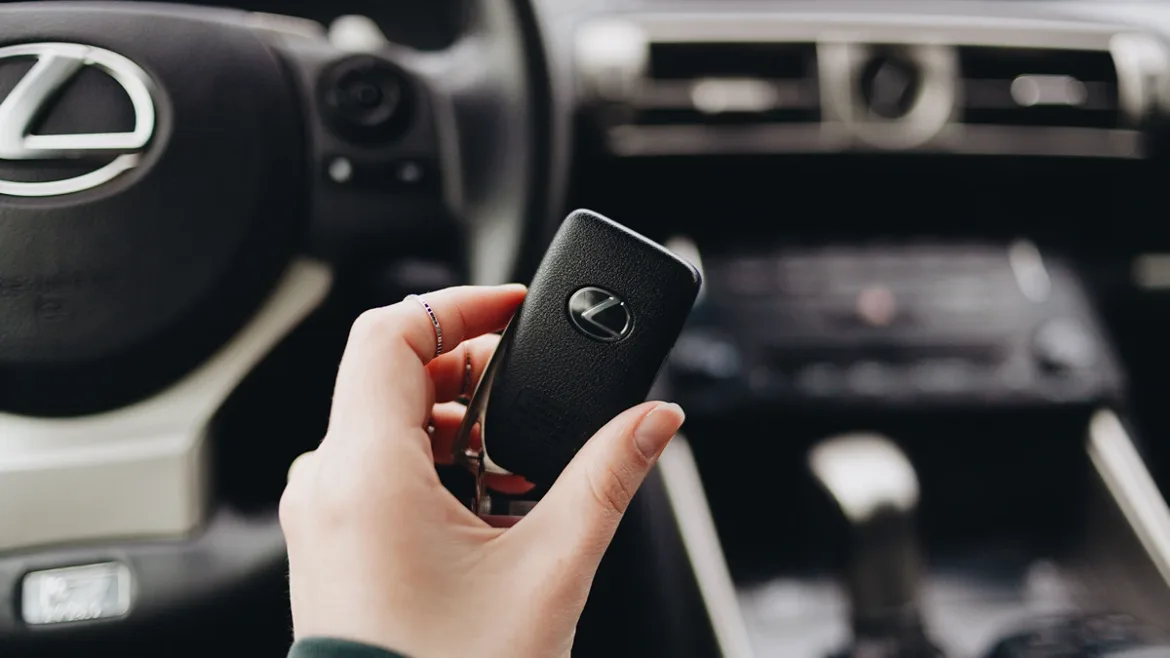
Remote key-fob systems are more advanced than transponder keys since they may feature both physical and remote functionality.
This remote capability can include locking/unlocking, triggering the alarm, popping the trunk, and even starting the car.
Some remote key-fob systems are bladed and don’t offer remote start. Others just use a mechanical bladed key as an emergency backup.
Remote key-fob systems also typically contain transponders.
Smart/Proximity Keys
Smart keys, also known as proximity keys, are “keyless” in that they allow a vehicle to detect your proximity and unlock automatically.
Most smart keys require a push-button start, reflecting more advanced modern car key security.
However, some vehicles with smart keys require you to insert the fob into an ignition slot to start the motor. Other automobiles use these slots as a backup method in case the fob’s battery is dead. Dead fob batteries might cause car key immobilizer issues.
Digital Keys
Some brands, such as Tesla and Rivian, primarily use digital keys for their cars. Digital keys control vehicles via a smartphone or wearable device like an Apple Watch. Still, Tesla and Rivian also offer key cards as physical backups.
All Keys Lost Vehicle: What Replacement Requires
No matter the key type you’re replacing, be prepared to show proof of ownership.
Replacing Basic Mechanical Keys
Using an automotive locksmith is the most straightforward way to replace a missing mechanical key on the spot, and many offer mobile service. Because this key design is so simple, locksmith car key replacement for mechanical keys can take minutes.
Replacing Standard Transponder Keys
Transponder keys are more expensive to replace on average because they need reprogramming to sync with your car’s immobilizer. An automotive locksmith or dealership completes this syncing with specialized diagnostic tools and car key programming software.
Most traditional transponder vehicle keys are bladed. As a result, replacing the bladed portion is similar to getting a new mechanical key.
Replacing Smart/Proximity Keys
Unlike standard transponder keys, syncing a new smart/proximity key isn’t just related to the vehicle’s immobilizer. An automotive locksmith or dealership will also need to sync the key with the car’s entry system and other remote commands.
Replacing Digital Keys
The process for replacing digital keys varies by vehicle make and model.
Almost all digital keys have a physical backup. You’ll likely need to visit a dealership for this alternative.
Some automakers also require a physical key to be in the car to transfer digital ownership through resources like apps.
Before bidding, contact a local authorized dealer for the brand you’re considering to ask about digital key replacement steps.
What You May Find When Confirming if an Auction Car Has No Keys
After you or a third party arrive in person to inspect a car, you might find keys present. However, related issues like a dead battery or a key fob not recognized by the vehicle may crop up.
Replacing a dead battery is more straightforward: head to an auto parts store, dealership, or specialty battery shop.
An unrecognized key fob can be more complex to address.
While low fob batteries can cause this issue, so can:
- Weak car batteries
- Radio-frequency interference
- Damaged fobs
- Lost synchronization
- Passive entry antenna problems
Start by checking the vehicle and fob batteries before hiring an automotive locksmith to diagnose the issue.
If you or a third party confirm that a key is truly missing, this limits how much of the car’s operation you can verify before purchasing.
While a missing key generally limits how much a car can be inspected by you or a third party before bidding, you can still:
- Use the title status to build a narrative.
- Order a ClearVin vehicle history report for a more thorough vehicle history.
- Check for static clues that may affirm condition.
Static clues are inspection signs shown while the vehicle is off.
Static clues include, but aren’t limited to, checking for:
- Undercarriage damage.
- Fluid leaks.
- Cracked belts and hoses.
- Rust.
- Uneven tire wear.
- Brake pad and rotor condition.
Let’s end with a quick recap of how to handle missing auction car keys on AutoBidMaster.
Conclusion: Buying an Auction Car Without Keys
Verifying whether an auction car has keys will help you factor replacement costs into your bid if needed.
If you find a vehicle doesn’t have keys, this doesn’t necessarily mean you shouldn’t bid. Several steps can help you mitigate no-key car auction risks.
After verifying that the key is gone, identify what kind of key the car uses. The time, specialized training, and tools required for replacement vary by key type. These factors shape replacement costs.
Mobile automotive locksmiths are the most convenient option for getting a new key. Most mobile car locksmiths will even cut and program standard transponder and smart/proximity keys. Alternatively, you can tow a car to a dealership or specialty locksmith if mobile assistance isn’t available.
While replacement resources are common, a vehicle may require repairs to sync with a new key. This limitation applies to standard transponder and smart keys rather than purely mechanical ones.
Ultimately, the value of a car with lost keys depends on the costs associated with its key replacement and condition uncertainty. Sometimes it makes financial sense to find a replacement. In other cases, you may benefit from bidding on another lot.
Is there a particular AutoBidMaster listing you’d like to verify key status for? Learn how we help you inspect vehicles before bidding.
Afterward, head over to our blog for more car auction bidding tips related to topics like undercarriage rust on salvage vehicles.
FAQ
Can you buy an auction car without keys?
Yes, but you’ll need proof of ownership to receive a new key.
How can you inspect an auction car without keys?
Ordering a ClearVin vehicle history report and examining static clues will help you evaluate the condition of an auction car with missing keys.
How much does car key replacement cost?
Are you considering the replacement cost of buying a car without a key? Missing key replacement costs depend on the key type. Getting a new mechanical key often ranges from $25 to $100. Acquiring another transponder key averages $100 to $250, and smart key replacement costs can range from $200 to over $500.
Sources (Accessed September, 2026):
- Shdow Security — Understanding Car Keys: Types, Programming, and How Chips Work
- Locksmith Solutions — A Comprehensive Guide to Different Types of Car Keys: How to Identify Yours
- KeyMe Locksmiths — Do You Need Proof of Ownership for Car Key Replacement?
- Geico — What To Do If You Lose Your Car Keys
- Tom’s Key Company — The Ultimate Guide to Car Key Replacement: Everything You Need to Know
- Fineline Locksmithing — I bought a car at auction and I need to get a key made for it
- KeyMe Locksmiths — “Key Not Detected” Warning: Causes and Fixes
- AutoZone — How Much Does a New Car Key Cost?