
Colorado Auto Auction: Rules, Restrictions, and Required Steps

Colorado has a highly active vehicle auction market, supported by strong demand for late-model vehicles, insurance total-loss units, hail-damaged cars and trucks, and retired fleet vehicles. But while inventory is plentiful, auction access for public buyers in Colorado is more restricted than in many other states — especially on major online platforms where licensing rules determine who is allowed to place bids.
This Behind the Bid guide explains how participation in Colorado auto auctions works, how title type affects access, when a broker is required, and what salvage and rebuilt rules mean for buyers after the sale.
Public Buyers and Auction Access in Colorado
Colorado does not require every vehicle owner to hold a dealer license simply to purchase or possess a vehicle. However, auction operator policies — not state law — control who can bid on vehicles listed at Colorado auction yards.
On most large auction platforms operating in the state:
- Clean-title vehicles are typically restricted to licensed dealers or approved brokers
- Salvage-title vehicles are also commonly restricted to broker or dealer bidding
- Only a limited number of categories are available to unrestricted public buyers
For most non-dealer participants, bidding in Colorado is carried out through a licensed broker account. The broker provides the credentials required to place bids, while the vehicle is titled in the buyer’s name after the sale.
This structure is especially important for first-time bidders who may assume that public participation automatically means public bidding access, which is not always the case with Colorado auto auctions.
Thousands of vehicles are waiting — join AutoBidMaster for free and start exploring today’s auctions.
Why Brokers Matter When Bidding in Colorado
Because many Colorado listings are restricted at the platform level, a broker serves as the compliant channel that allows public buyers to participate in clean-title and salvage-title sales.
Bidding through a licensed broker typically provides:
- Access to auction lots that would otherwise be dealer-only
- Eligibility verification before bidding
- Support with post-sale paperwork and title transfer
- Guidance on Colorado-specific salvage and rebuilt outcomes
This helps reduce the risk of blocked bids, canceled sales, or compliance issues during post-auction processing.
Salvage Titles and Driving Restrictions
Colorado allows salvage-title vehicles to be purchased, resold, and repaired, but a salvage title means the vehicle is not legally roadworthy until specific steps are completed.
If a vehicle is branded as salvage at a Colorado auto auction:
- It cannot be driven on public roads
- It must be transported from the auction location
- It cannot be registered or plated in its salvage condition
To return a salvage vehicle to legal road use, Colorado generally requires:
- Completion of necessary repairs
- A Certified VIN inspection by an approved inspector
- Submission of documentation and parts verification
- Issuance of a Rebuilt From Salvage Title
Only after these steps can the vehicle move toward registration and insurance. These processes are important to understand before bidding on salvage units in the state.
Clean-Title Vehicles and Access Restrictions
Clean-title vehicles may follow standard ownership and registration rules after they are titled in the buyer’s name, but access to them at auction is where public buyers most often encounter restrictions.
On major auction platforms in Colorado:
- Many clean-title listings are limited to licensed dealers or brokers
- Public buyers attempting to bid directly may be prevented from doing so
- Some bids may be canceled if licensing requirements are not met
Using a broker allows public buyers to participate in these listings while ensuring the transaction remains compliant with auction platform policies.
Colorado Vehicle Market Snapshot: Facts and Figures
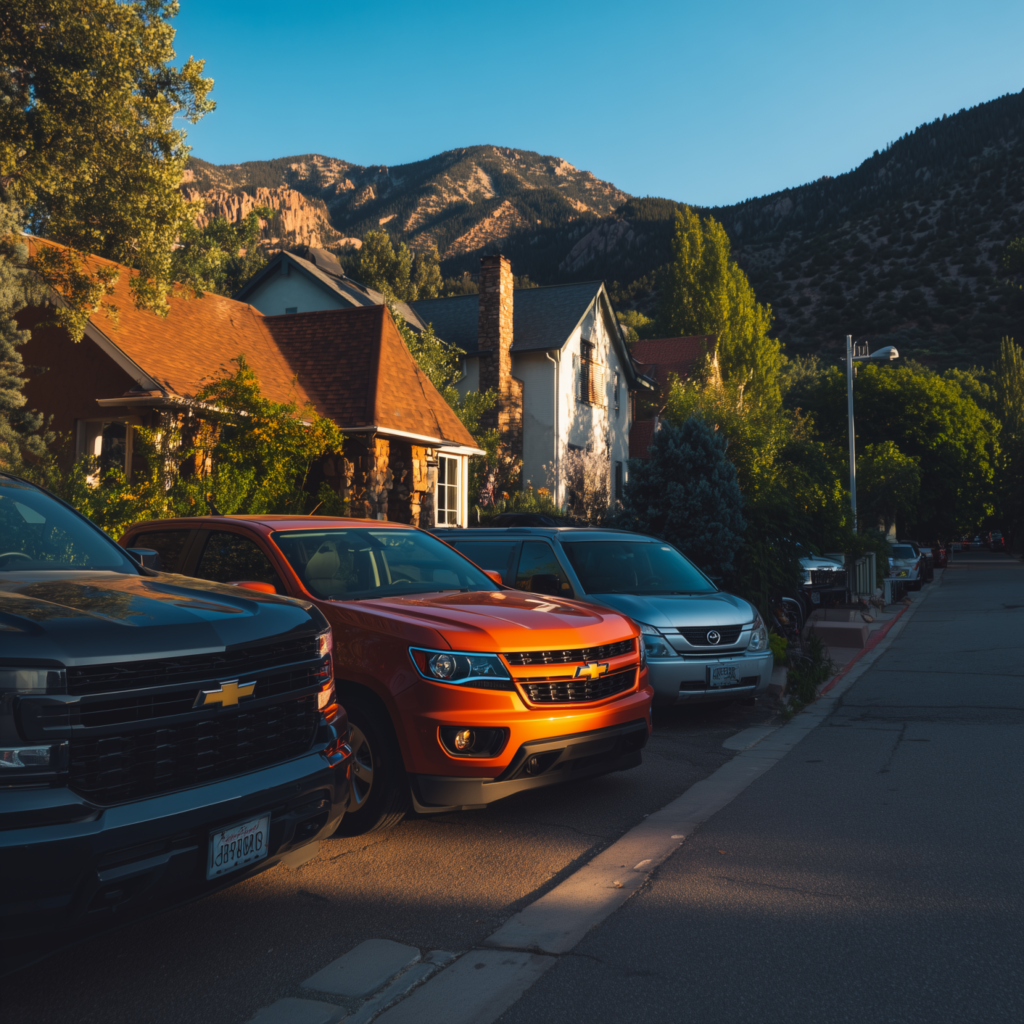
Colorado auto auction landscape reflects the size and composition of its vehicle fleet.
Available transportation and energy reporting indicates:
- Approximately 5.2 million registered motor vehicles statewide
- Roughly 4.5 million light-duty vehicles, making up most of the fleet
- A rapidly growing population of battery-electric and plug-in hybrid vehicles
- Ongoing turnover from insurance total losses, lease returns, and fleet retirements
Colorado’s frequent hail events also contribute to the number of cosmetically damaged but repairable vehicles appearing in auction listings.
Rebuilt From Salvage Costs and Required Steps
Colorado does not bundle rebuilt-title costs into a single flat fee, but there are predictable state-level charges that buyers can plan for.
Typical mandatory expenses include:
- A Certified VIN inspection fee
- A rebuilt title issuance fee
Together, these generally amount to a little over sixty dollars at minimum before county-level fees, taxes, or any repair-related expenses.
Additional costs that buyers should budget for may include:
- Transportation from the auction yard
- Parts and repair work
- Possible re-inspection fees
- Required stamping or labeling for rebuilt vehicles
Understanding these requirements helps bidders evaluate whether a salvage vehicle remains practical once post-sale costs are considered.
Pros and Cons of Buying at an Auction in Colorado
| Pros ✅ | Cons ❌ |
| Strong inventory, including late-model, fleet, and hail-damaged vehicles | Many Colorado listings require broker or dealer bidding access |
| Multiple auction locations and statewide online access | Salvage vehicles must be transported and cannot be driven immediately |
| Growing presence of electrified vehicles entering the resale pipeline | Additional inspection, documentation, and title costs apply after the sale |
Frequently Asked Questions
Do I need a dealer license to bid in Colorado auctions?
Not in every case, but many clean-title and salvage-title vehicles require bids to be placed through a licensed broker.
Can I bid directly on Colorado salvage vehicles as a public buyer?
Often, no. Many salvage listings in Colorado are also broker-restricted at the platform level.
Can I drive a salvage vehicle home after purchase?
No. Salvage vehicles must be towed or transported and cannot be driven until rebuilt and retitled.
What does “Rebuilt From Salvage” mean in Colorado?
It indicates that a previously salvage-titled vehicle has been repaired, inspected, and approved for a rebuilt title.
Can out-of-state buyers participate in Colorado auctions?
Yes, but auction licensing rules still apply, and buyers must follow both Colorado title rules and their home-state registration requirements.
Sources (accessed January 2026):
- Colorado Department of Revenue – Division of Motor Vehicles, salvage and rebuilt title guidance
- Colorado State Patrol – Certified VIN inspection program and fee schedule
- Colorado Revised Statutes – title branding and rebuilt-from-salvage requirements
- Federal and state motor-vehicle registration statistics for Colorado
- U.S. Department of Energy vehicle and EV registration reporting for Colorado
- Auction operator participation and licensing policy documentation for Colorado locations
Don’t miss out on great deals. Sign up for free and start bidding in minutes.

- What to Know Before Bidding on Vehicles in Pennsylvania - January 20, 2026
- Most Sought-After Used Car Brands in the USA in Recent Years - January 14, 2026
- Making Sense of Vehicle Bidding in North Carolina - January 14, 2026