
Why You Should Think Twice Before Buying a New Car: Real Cost of Ownership
Table of Contents
- Key Takeaways
- The Real Cost of a New Car
- Hidden Costs of New Cars That Affect the Final Price
- Insurance, Registration, and Maintenance
- The Peace of Mind Question
- Smarter Alternatives
- How Salvage Cars Compare With Other Options
- How AutoBidMaster Fits In
- Before You Bid: Calculating the Total Cost
- Before You Sign at the Dealership
- Frequently Asked Questions
- Final Thoughts
According to Kelley Blue Book, the average transaction price for a new vehicle in the United States reached $49,758 in June 2026. Meanwhile, Cox Automotive reported an average used-vehicle listing price of $27,027.
That price gap is what most buyers notice first. What they miss is that the sticker price is the smallest part of the story. For buyers considering whether to buy used instead of new, depreciation, dealer fees, insurance, and financing costs can significantly change the five-year math. Understanding these costs can help you decide whether to avoid buying a new car or whether the higher upfront cost is justified.
New cars have a place. If you drive 25,000 miles a year, keep vehicles for a decade, and qualify for a manufacturer’s subsidized financing rate, buying new can make sense. For many buyers, it may not. This article walks through the numbers so you can decide which option offers better value for you.
Key Takeaways
- The average new vehicle transaction price reached about $49,758 in 2026, compared with roughly $27,027 for used vehicles.
- Edmunds reports average first-year depreciation of 23.5% of MSRP, while Kelley Blue Book projects that a 2026 model retains about 45% of its value after five years.
- Dealer documentation fees average $350 to $500 nationally and reach $1,200 or more in states without fee caps, while the actual processing cost is estimated at under $50.
- The average destination fee is $1,550–$1,600 in 2026, and average dealer gross profit per new vehicle is $1,780–$1,880.
- Buying a 3- to 5-year-old used car can substantially reduce five-year ownership costs by lowering the purchase price and avoiding the steepest depreciation.
- Salvage- and rebuilt-title vehicles sell at meaningful discounts to comparable clean-title equivalents, though they come with insurance and resale trade-offs.
The Real Cost of a New Car
Depreciation is the largest expense in new car ownership, and it is not reflected in the monthly payment.
Edmunds data puts average first-year depreciation at 23.5% of MSRP. Kelley Blue Book projects that an average 2026 model-year vehicle retains about 45% of its original value after five years. This initial off-the-lot loss is one of the biggest financial disadvantages of buying new.
Applied to a $45,000 vehicle:
| Ownership Year | Approximate Value | Cumulative Loss |
| Purchase | $45,000 | — |
| Year 1 | $34,425 | $10,575 |
| Year 3 | $27,900 | $17,100 |
| Year 5 | $20,250 | $24,750 |
Illustrative example based on KBB’s projected five-year residual value. Actual depreciation varies significantly by vehicle.
That first-year figure deserves a moment. A $10,575 first-year loss illustrates how quickly depreciation can affect the economics of a new vehicle.
The buyer who purchases that same vehicle at three years old pays roughly $27,900 and faces a much gentler depreciation curve from there. The steepest portion has already been paid by someone else.
Hidden Costs of New Cars That Affect the Final Price
The advertised vehicle price may not be the final amount you pay. Several charges only appear when you get to the paperwork.
Destination charge. The manufacturer’s fee for shipping the vehicle from factory to dealer averages $1,550–$1,600 in 2026. This one is legitimate and generally non-negotiable, since it comes from the manufacturer rather than the dealer.
Documentation fee. The national average ranges from $350 to $500, though dealers in states without fee caps may charge $700 to $1,200. Florida averages roughly $1,000–$1,200, with no statewide cap. California caps the fee at $85. The actual processing cost is estimated at under $50, with the remainder contributing to dealer profit.
Dealer add-ons. Roughly 70% of dealers charge no mandatory extras. Those that do average $363 for items such as paint protection, nitrogen tire fill, and VIN etching.
Vehicle prep fees. Some dealers charge separate preparation or reconditioning fees. Ask what the fee covers and whether the work is already included elsewhere in the purchase price.
Sales tax on new cars. You pay tax on $49,758, not on the $34,000 the vehicle will be worth in a year. In a 7% state, that is roughly $3,483 in tax, assessed on the purchase price. Much of a vehicle’s depreciation can occur soon after purchase.
Total dealer fees on new cars average $2,000 to $4,000 across most states, with the range running from $315 in Alaska to $6,369 in Louisiana.
For context, the average dealer gross profit per new vehicle sold in 2026 is $1,780–$1,880, with about $1,750–$1,920 coming from finance and insurance products.
Insurance, Registration, and Maintenance
The costs continue after you leave the lot.
Insurance scales with vehicle value. A newer, more expensive car costs more to replace, so comprehensive and collision premiums tend to be higher. The insurance premium difference between a new car and a comparable used car can add significantly to the total cost of ownership over five years. Advanced driver assistance systems can also add to repair costs, since a bumper replacement on a sensor-equipped vehicle may require calibration costing $350 to $500 per system.
Registration in many states is value-based, meaning newer vehicles incur higher annual fees. Some states and local jurisdictions also impose annual vehicle property taxes or value-based registration fees, which can make newer vehicles more expensive to own.
Maintenance and parts at dealership service departments can cost more than at independent shops, and the gap widens for luxury brands. Manufacturer-specific components on newer vehicles may have limited aftermarket alternatives during the first several years.
The Peace of Mind Question
New cars come with full warranties, and that has genuine value. It is worth examining what the warranty actually covers.
New vehicles are not immune to problems. First-model-year vehicles and redesigned models can have more issues than versions that have been in production for several years, as manufacturing processes and component sourcing stabilize over time. Recalls also affect new vehicles regularly.
A three-year-old vehicle with a documented service history offers something different: a track record. You can research known issues for that specific model year, review vehicle reports, and check whether recalls were completed. That information does not exist for a vehicle that has just entered production.
Certified pre-owned programs further bridge the gap by adding manufacturer-backed warranty coverage to vehicles that have already gone through the steepest depreciation.
Smarter Alternatives
Three paths offer better value for most buyers.
Certified pre-owned. These are typically two- to four-year-old vehicles that have passed a manufacturer’s inspection and carry extended warranty coverage. You typically pay more than you would for a comparable non-CPO vehicle, but less than you would for the equivalent new model.
Low-mileage used vehicles. Off-lease vehicles typically return to the market after two or three years, with mileage limits set by the lease terms and maintenance records available. A three-year-old Honda Accord or Toyota Camry with 30,000 miles still has many years of useful life ahead and has already gone through its steepest depreciation.
Salvage and rebuilt vehicles. For buyers willing to handle repairs or accept cosmetic imperfections, salvage auctions can offer some of the largest discounts available in the market.
New Car vs Used Car: A Direct Comparison
| Factor | New $45,000 Sedan | 3-Year-Old, Same Model |
| Purchase price | $45,000 | $28,000 |
| Sales tax (7%) | $3,150 | $1,960 |
| Dealer markup | $2,500 | $1,200 |
| Depreciation over 5 years | ~$24,750 | ~$11,000 |
Illustrative estimates. Actual depreciation, fees, taxes, and financing costs vary by vehicle and location.
Industry analysis supports this pattern. Even accounting for higher used-car interest rates, typically around 11% versus 7% for new, the lower purchase price and reduced depreciation can result in five-year out-of-pocket costs that are $20,000 to $25,000 lower than buying new.
How Salvage Cars Compare With Other Options
Salvage auctions occupy a specific position in this market, and understanding what they are is essential to avoid both overestimating and dismissing them.
A salvage title is a branded title applied under state-specific rules, often after a vehicle has been declared a total loss by an insurer. The criteria and thresholds vary by state. Damage can range from hail or flood damage to major collision damage, so the title brand alone does not tell you the full repair story.
That distinction is where the opportunity lies. Our explainer on what a salvage title is covers how these designations are assigned, while our comparison of salvage and clean title cars explains what each means for ownership.
What salvage buyers should consider:
- Discounts are substantial, typically 20% or more compared with identical clean-title vehicles, and can be considerably larger on higher-value models.
- Insurance options can be more limited, particularly for comprehensive and collision coverage, and requirements vary by insurer and state.
- Financing options are more limited, as many lenders decline branded titles.
- Resale value is typically lower.
For buyers who can assess the scope of repairs, have access to a qualified shop, and intend to keep the vehicle rather than flip it quickly, salvage cars can offer compelling value. This can be particularly true for luxury and utility vehicles, where the dollar value of the discount may be greater.
For example, a $60,000 SUV with contained front-end damage can represent a very different opportunity than a $12,000 sedan with similar damage because the potential dollar savings can be much larger.
How AutoBidMaster Fits In
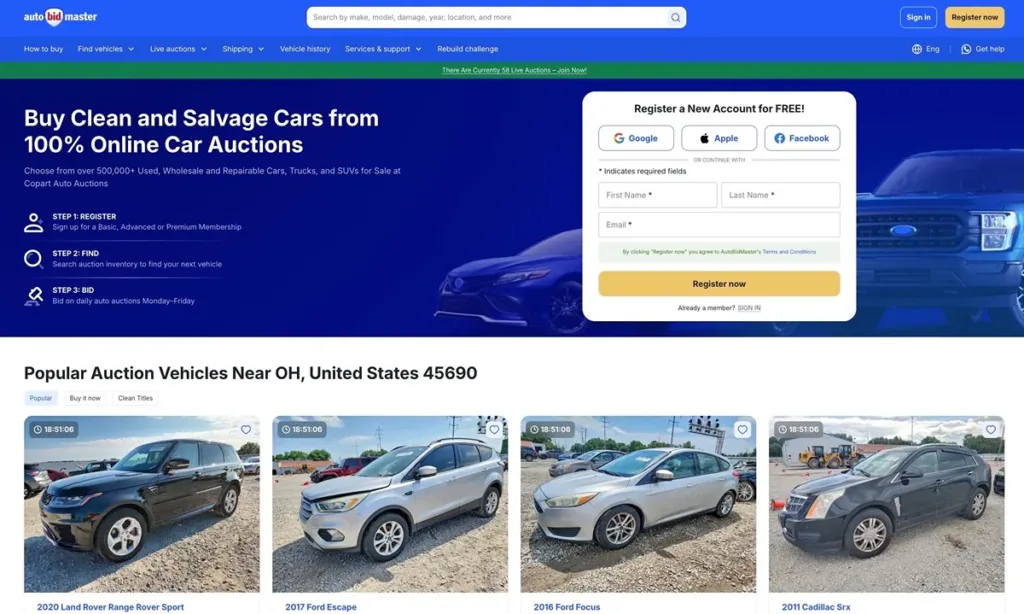
AutoBidMaster helps private buyers who do not hold a dealer license access Copart auction inventory. As a registered broker, it bids on your behalf and assists you throughout the process, from bidding to transportation and post-purchase paperwork.
To access the latest listings, all you need to do is create a free account on the platform. Every listing includes the vehicle’s title status and damage type, helping you assess potential repair costs and value before bidding.
Browse current salvage inventory to see how auction prices compare with retail prices for the same models.
Before You Bid: Calculating the Total Cost
A little planning can help you understand the full cost of a salvage vehicle and assess its potential value. Here’s a simple way to estimate the salvage car value:
Total cost = winning bid + auction fees + transportation + estimated repairs + title/inspection costs + insurance quote
Next, compare your estimate with the local market price of a comparable clean-title vehicle.
Tip: Allow some room for unexpected repair costs, especially when your estimate is based on listing photos or an initial damage assessment.
Read also: How to Buy Used Vehicle Online: Step-by-Step Guide
Before You Sign at the Dealership
Work through these questions:
- Have you calculated the five-year total cost, including new car depreciation, insurance, interest, and fees, rather than comparing monthly payments?
- Have you requested an out-the-door price in writing with every fee itemized separately?
- Have you compared the same model at three years old, both CPO and standard used?
- Do you know your state’s doc fee cap, and have you attempted to negotiate it?
- Have you priced insurance on both the new and used version before committing?
- Are you buying for a specific practical reason, or because the new vehicle is appealing?
The last question matters more than it appears. New cars are genuinely enjoyable. However, recognizing the difference between desire and necessity can help you make a more considered purchase.
Frequently Asked Questions
How much does a new car depreciate in the first year?
Edmunds reports average first-year depreciation of 23.5% of MSRP, though figures vary considerably by model. Luxury vehicles and electric vehicles generally depreciate faster than trucks and SUVs.
Is a certified pre-owned car as reliable as a new car?
CPO programs typically include a manufacturer-backed inspection and additional warranty coverage, although requirements vary by automaker. They also offer an advantage new cars lack: a documented track record. You can research known issues for that specific model year before buying—information that does not yet exist for a first-year model.
Why are insurance premiums higher for new cars?
Premiums scale with replacement cost. A newer vehicle costs more to replace or repair, and advanced driver assistance systems add calibration expenses to routine repairs. Comprehensive and collision coverage reflect that higher exposure.
What hidden dealer fees should I watch out for?
The average documentation fee is $465, according to CarEdge’s 2026 analysis of 75,748 verified out-the-door quotes. Among dealers that charge add-ons, the average is $363, while 70% of dealers in the study had no add-ons. Request an itemized out-the-door price in writing, and separate government fees from dealer fees before negotiating.
How much can I save buying a salvage car instead of a new one?
Savings vary widely by vehicle and damage type. Salvage and rebuilt titles typically sell at a meaningful discount to identical clean-title vehicles, and the dollar savings scale with vehicle value. The most reliable approach is to calculate your total cost, including the bid, fees, transportation, and repairs, then compare it with local retail prices for the same year and model.
Is financing a new car a bad idea?
Not inherently, but the structure deserves scrutiny. Extended loan terms lower monthly payments while increasing total interest paid, and a rapidly depreciating vehicle can leave you owing more than it is worth for the first several years. Compare total interest across the full term rather than comparing monthly payments.
Final Thoughts
New vehicles are well-built, covered by a full factory warranty, and genuinely enjoyable to own. The question is not whether they are good products. It is whether the price reflects the value received.
For many buyers, a three-year-old version of the same vehicle can provide similar everyday utility while avoiding the steepest years of depreciation. That can make a well-maintained used vehicle a better car investment. Salvage auctions can reduce the purchase price even further for buyers who understand the repair and ownership trade-offs.
The decision becomes clearer when you calculate rather than assume. Compare the five-year costs of both options before you visit a showroom, and you’ll have a clearer picture of which one offers the better value for you.
Sources (accessed August 2026):
- Kelley Blue Book – Average Transaction Price and Residual Value Projections
- Edmunds – First-Year Depreciation Analysis
- Cox Automotive – Used-Vehicle Data
- CarEdge – State of Dealer Fees Report, based on 75,748 verified out-the-door quotes
- U.S. Bureau of Labor Statistics – Annual Vehicle Depreciation Rates

- Buying Copart Vehicles in Montana: A Private Buyer’s Guide - November 3, 2026
- 2026 Summer Rebuild Challenge: Introducing the Winners - October 27, 2026
- Buying Copart Vehicles in Nebraska: A Private Buyer’s Guide - October 22, 2026