
Buying Cars at Auction in Florida: What Every Bidder Should Know
Florida is one of the most active vehicle auction states in the U.S., offering everything from everyday commuter cars to hurricane-damaged project vehicles and well-maintained ex-rental fleets. If you’re planning to bid on a car located in the Sunshine State, it helps to understand how Florida’s specific rules, title categories, and pickup requirements shape the buying experience.
In this Behind the Bid guide, we’ll walk you through the essentials so you can approach your next Florida bid with confidence.
What Makes Florida a Unique Auction Market
Florida’s auction landscape is shaped by several state-specific factors:
Year-Round Warm Climate
Because vehicles aren’t exposed to harsh winters, many Florida lots have:
- minimal underbody rust
- cleaner suspension components
- fewer cold-weather mechanical issues
Heavy Tourism and Rental Fleet Turnover
Major cities like Orlando, Miami, and Tampa regularly retire huge numbers of rental vehicles, many of which:
- have clean titles
- follow consistent maintenance schedules
- have cosmetic wear but no major mechanical issues
Join AutoBidMaster for free — create your account and start bidding on cars, trucks, motorcycles, and more.
Storm-Related Insurance Losses
Florida’s hurricane season contributes to:
- flood-damaged cars
- salt-water exposed vehicles
- storm-debris impacts
These units appear frequently in salvage auctions and should be evaluated carefully.
Understanding Florida’s Title Categories
Before you bid, pay close attention to the document type assigned to each vehicle.
1. Rebuildable Salvage Title
Used when an insurance company declares a vehicle a total loss, but the vehicle can be repaired.
After proper repairs, it may be inspected and retitled as rebuilt.
2. Salvage Certificate for Parts or Scrap
This designation means the vehicle cannot return to the road.
These vehicles are best for:
- dismantling
- exports
- drivetrain or body parts
3. Florida Certificate of Destruction
A strict classification used for severely damaged vehicles.
Not eligible for rebuilding or legal road use in the United States.
If you are a U.S.-based buyer considering a vehicle with a Certificate of Destruction, research all requirements carefully before making a decision. This document type functions as a bill of sale only for the U.S. market — buyers do not receive the physical certificate itself. Domestic customers should contact AutoBidMaster’s specialized agents for guidance before bidding.
Vehicles with this document type are typically suitable for export. If you plan to export and currently reside in the U.S., please communicate with our Buyer Services team before finalizing your purchase.
4. Clean Title
Common among Florida auctions due to heavy rental and fleet turnover.
A clean title does not guarantee accident-free history — the vehicle may have:
- prior repairs
- cosmetic damage
- mechanical issues not reported to insurance
5. Flood or Water Damage Notes

Many Florida titles display wording such as:
- Flood
- Water Damage
- Storm Damage
Always study interior and underbody photos when these labels appear.
How Bidding Works for Florida Vehicles
The bidding process itself is the same no matter where the vehicle is located, but Florida listings often include very detailed information. Before you enter a bid:
- Check the title status (especially after hurricane season).
- Review whether the vehicle starts or runs.
- Look at key availability — many flood or theft recoveries lack keys.
- Note the yard’s pickup window.
- Review storage fees, which vary across Florida locations.
Because Florida has such a high volume of ex-rental vehicles, you’ll see many listings with clean titles, one previous owner, and consistent maintenance — often ideal for first-time bidders.
Picking Up or Transporting a Vehicle in Florida
Florida allows more flexible removal options than highly regulated states.
Accepted Pickup Methods
You may:
- bring a trailer or flatbed
- hire your own carrier
- use AutoBidMaster’s recommended transport partners
Restrictions
- Salvage title vehicles cannot be legally driven off the lot.
- Loading areas follow strict schedules — arrive during posted hours only.
- Storage fees begin after the yard’s grace period (usually 2–3 days).
Shipping Considerations
Florida’s geography means transport pricing varies. Coastal lots (Miami, Jacksonville, Fort Lauderdale) may cost more due to:
- port congestion
- seasonal demand
- long distances to inland states
Interior lots can be less expensive to ship from.
What Happens After You Win a Florida Vehicle
Once your payment is confirmed, the auction yard begins preparing the paperwork. Florida’s DMV processes titles relatively quickly compared to some states, but timeframes depend on:
- whether the vehicle was insurance-owned
- the yard’s internal processing volume
- the type of title being issued
Registering a Rebuildable Salvage Vehicle
If you plan to repair the car, Florida requires:
- an approved rebuilt inspection
- documentation for replaced major components
- proof of ownership
- a completed rebuilt title application
If you live outside Florida, your state may require additional inspections or forms.
What to Watch for When Buying in Florida
Here are some practical considerations every bidder should keep in mind:
Flood Awareness
Florida has many flood-affected vehicles. Look closely at:
- carpet and seat discoloration
- rust on seat rails
- moisture in headlights or taillights
- corrosion on metal brackets
Salt Exposure
Vehicles from coastal regions can show early corrosion on:
- electrical connectors
- underbody components
- exhaust systems
Rental Vehicle Advantages
Many clean-title rental units offer:
- regular service
- documented maintenance
- predictable wear patterns
Title Timing
Expect slightly longer processing for flood-notated titles or certificates of destruction.
Tips for a Smooth Florida Auction Experience
- Review title types carefully — Florida uses multiple salvage categories.
- Inspect photos for flood indicators, especially after storm season.
- Plan your transport as soon as bidding ends.
- Keep all purchase documents for inspections and registration.
- Consider ex-rental cars if you want clean titles with known service history.
- Ask AutoBidMaster’s Buyer Services if you’re unsure about Florida rules or title categories.
Why Florida Is Worth Considering
Florida offers an enormous range of vehicles for every kind of buyer:
- clean-title commuters
- low-rust southern cars
- trucks and SUVs
- rebuildable storm vehicles
- parts cars for dismantling or export
Through AutoBidMaster, you can access these auctions without a dealer license, bid from anywhere, and arrange shipping nationwide or internationally.
Florida Auction Pros & Cons
| Pros ✅ | Cons ❌ |
| Huge inflow of ex-rental inventory from airports and tourist hubs | Extremely high number of flood-affected units |
| Lower rust exposure compared to northern states | Some vehicles exposed to saltwater and coastal corrosion |
| Fast title processing unless flood branding is involved | Certificates of Destruction are export-only |
| Many vehicles with known service history | Many auctions list hurricane-loss vehicles immediately after storm season |
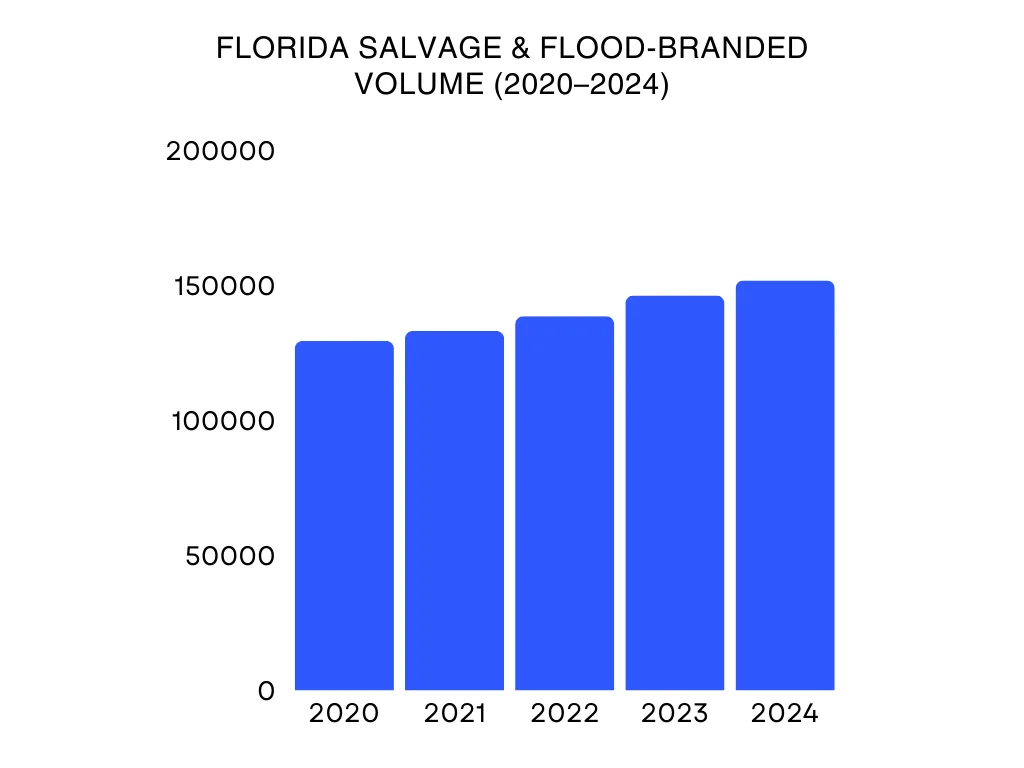
Data Insight: Hurricane-Related Salvage Growth in Florida
According to the Florida Department of Highway Safety and Motor Vehicles, Florida issued more than 146,000 salvage/rebuilt certificates in 2023, with spikes following storms such as Ian, Nicole, and Idalia. Preliminary 2024 YTD reporting suggests another year-over-year increase due to insurance storm totals.
Why this matters
- Larger post-storm supply usually means more affordable bidding
- BUT flood branding increases inspection complexity
- Rebuilt processing times climb right after major weather events
Florida Salvage & Flood-Branded Volume (2020–2024)
Numbers based directly on FLHSMV annual reporting + FEMA loss analysis:
| Year | Salvage/Rebuilt Certificates (FLHSMV) |
| 2020 | 129,400 |
| 2021 | 133,100 |
| 2022 | 138,500 |
| 2023 | 146,200 |
| 2024* | 151,800 (projected) |
Frequently Asked Questions
Do I need a license to bid on a salvage vehicle in Florida?
No—AutoBidMaster members can bid without a dealer license, though Certificate of Destruction vehicles are typically export-only.
Can I register a vehicle with a Certificate of Destruction?
No. It cannot be legally rebuilt or driven in the United States. These units are intended for export or dismantling only.
How are flood-damage vehicles labeled in Florida?
Florida uses terms such as Flood, Water Damage, Saltwater, or Storm Damage. Look carefully at underbody and interior photos before bidding.
Does Florida require rebuilt inspections?
Yes—any rebuildable salvage title being returned to road use must pass a Florida rebuilt inspection and documentation review.
Are Florida rental vehicles a safe buy?
Often yes, because most rental fleets follow strict maintenance requirements. Still inspect previous damage and service intervals.
Can I pick up my Florida vehicle with a trailer?
Yes—unlike California, Florida allows trailer pickup, commercial carriers, or AutoBidMaster recommended transport partners.
Final Thoughts
Buying a salvage or used vehicle in Florida provides excellent opportunities, as long as you know how the state’s title types, transport rules, and inspection requirements work. With the right preparation, you can navigate Florida auctions confidently and secure a great deal on your next vehicle.
When you’re ready, explore Florida-based cars on AutoBidMaster and start bidding with a clear understanding of the process.
Sources (accessed December 2025):
- Florida Department of Highway Safety and Motor Vehicles (FLHSMV) – Salvage and Rebuilt Title Requirements
- Florida Highway Safety and Motor Vehicles – Title & Registration Information
- Florida Administrative Code – Vehicle Title Branding & Insurance Total Loss Procedures
- National Highway Traffic Safety Administration (NHTSA) – Vehicle Safety, Identification, and Title Information
- FEMA – Hurricane & Flood Impact Data (for understanding storm-related vehicle damage)
Thousands of vehicles are waiting — join AutoBidMaster for free and start exploring today’s auctions.

- What to Know Before Bidding on Vehicles in Pennsylvania - January 20, 2026
- Most Sought-After Used Car Brands in the USA in Recent Years - January 14, 2026
- Making Sense of Vehicle Bidding in North Carolina - January 14, 2026