
New York Auction Bidding Explained

When you plan to bid at New York auto auctions—whether for clean-title or salvage vehicles—you may wonder when you need a license, whether public buyers can participate, and how the salvage process works. In New York, the answer depends heavily on the auction type and the vehicle’s title status. The state has detailed rules on salvage certificates, rebuilt inspections, disclosure requirements, and restrictions on “parts-only” vehicles, and these rules directly influence who can bid and what happens after the purchase.
This Behind the Bid guide explains how New York’s auto auction system works, outlines the requirements for different vehicle types, and helps you understand what happens after you win a bid. It follows the structure of comparable guides that explain state-level auction rules and rebuild processes.
Importantly, many salvage pools and wholesale auctions in New York require dealer or dismantler licenses for direct bidding. However, various public auctions allow individuals to participate without an automotive business license, especially in seized, surplus, or impound inventory.
Licensing and Buyer Rules in New York
Salvage Pools and Dealer-Only Access
Many large salvage pools and wholesale auction platforms operating in New York restrict bidding to licensed automotive dealers, dismantlers, or wholesale buyers. These requirements generally follow from New York Vehicle and Traffic Law, which defines salvage vehicles, junk vehicles, and the standards for handling them. As a result, if you are not a licensed automotive business, you may not qualify to bid directly at certain salvage yards or insurance-only auctions.
Auction operators typically require business credentials such as:
- dealer license,
- dismantler authorization,
- wholesale buying credentials,
- or, in some cases, proof of business insurance and state tax registration.
Because salvage pools often handle insurance-loss vehicles, flood-damaged units, or severe collision inventory, the state treats them differently from ordinary resale markets.
Ready to start bidding? Register for free on AutoBidMaster and explore thousands of clean and salvage vehicles today.
Public Auctions and Government Auctions

Despite the restrictions above, New York also has public auctions that allow individual participation. These include certain impound, seizure, forfeiture, surplus, and abandoned-vehicle auctions operated by state or municipal entities. These auctions may allow any qualifying member of the public to register and bid. They usually feature rules about payment timing, cash or certified funds, and mandatory pickup procedures, often with short windows.
Clean-Title Auctions and Wholesale Dealer Sales
Wholesale clean-title auctions often operate similarly to salvage pools, requiring dealer or wholesale licensing for direct participation. Public auctions—such as surplus or seized vehicle sales—may also include clean-title units, but most dealer-to-dealer wholesale environments require professional licensing.
When a listing indicates “dealer only,” it signals that you must have a retail, wholesale, or dismantler license to bid directly.
Salvage and Rebuilt Title Procedures in New York
Salvage Certificate (MV-907A)
Buying a salvage vehicle in New York typically involves obtaining the Salvage Certificate, also known as MV-907A. This certificate documents that the vehicle was declared a total loss by an insurance company or meets statutory criteria for salvage classification. A salvage certificate is not a registration document and does not permit road use.
After purchase, next steps typically include:
- the salvage certificate,
- proof of ownership or sale,
- a damage disclosure (provided if available — not guaranteed; sellers are not required to provide this),
- payment of appropriate tax,
- and an application for the salvage examination.
There are many cases in which we cannot obtain the damage disclosure, and sellers are not required to provide it.
Salvage Examination and Rebuilt Title
New York requires a formal salvage examination through the Department of Motor Vehicles before issuing any rebuilt title. During this inspection, the state confirms the vehicle’s identity, checks that major replacement components were legally obtained, and screens for potential theft or fraudulent activity.
If the inspection is approved, the DMV will issue a rebuilt title branded accordingly, generally noted as rebuilt salvage.
Vehicles Marked Non-Rebuildable
Some vehicles sold as salvage are designated “parts-only,” “non-repairable,” or “non-rebuildable.” These units cannot be registered for road use in New York and are suitable only for parts or recycling. Buyers who intend to drive a salvage vehicle should verify that the unit is, in fact, rebuildable before bidding.
Title Branding and Disclosure Requirements
New York law requires auctioneers and sellers to disclose vehicle title status and seller identity at the point of sale. Salvage, junk, or rebuilt title information must be communicated clearly. Failure to disclose salvage status may result in penalties, and buyers who unknowingly purchase salvage vehicles may face difficulties securing insurance or title later.
Additionally, New York’s used-car requirements, including certain warranty obligations, may apply when a corrected title is later transferred to an end user, depending on the vehicle’s age and mileage at resale.
Data Analytics: New York’s Auction and Salvage Landscape
Although New York does not publish a unified yearly salvage auction database, several patterns appear based on insurance activity, vehicle totals, and DMV processing volume.
- New York maintains strict salvage certification and rebuilt examination procedures, reducing unregulated salvage resale.
- Salvage pools frequently include insurance-loss, flood-damage, collision, repossession, theft-recovery, and declared total-loss units.
- Government auctions—including municipal, county, state, or public-authority auctions—represent a steady supply of vehicles available to public bidders.
- In urban areas, seized and abandoned vehicles continuously enter municipal auction channels, feeding public inventory.
Because the system channels salvage inventory into clearly labeled categories, auctions in New York often contain a higher proportion of salvage-related units than regular used-car retail environments. This means bidders should treat these sales as project purchases rather than simple retail transactions.
Where exact figures are unavailable, estimated percentages or a three-scenario table (low, moderate, high salvage share) helps readers understand risk, repair requirements, and expected total cost.
Pros and Cons
| Pros ✅ | Cons ❌ |
| Access to government, surplus, and impound auctions without dealer licensing | Many auctions are dealer-only, especially salvage pools |
| Wide variety of vehicle categories, including clean title and salvage | Rebuilt inspections and documentation add costs and waiting periods |
| Potential below-retail pricing for repairable vehicles | Non-repairable units cannot be registered |
| Clear salvage and rebuilt procedures for compliant buyers | Salvage vehicles often have higher insurance scrutiny |
| Opportunities for restorers, hobbyists, and parts seekers | Lower resale value even after rebuilding |
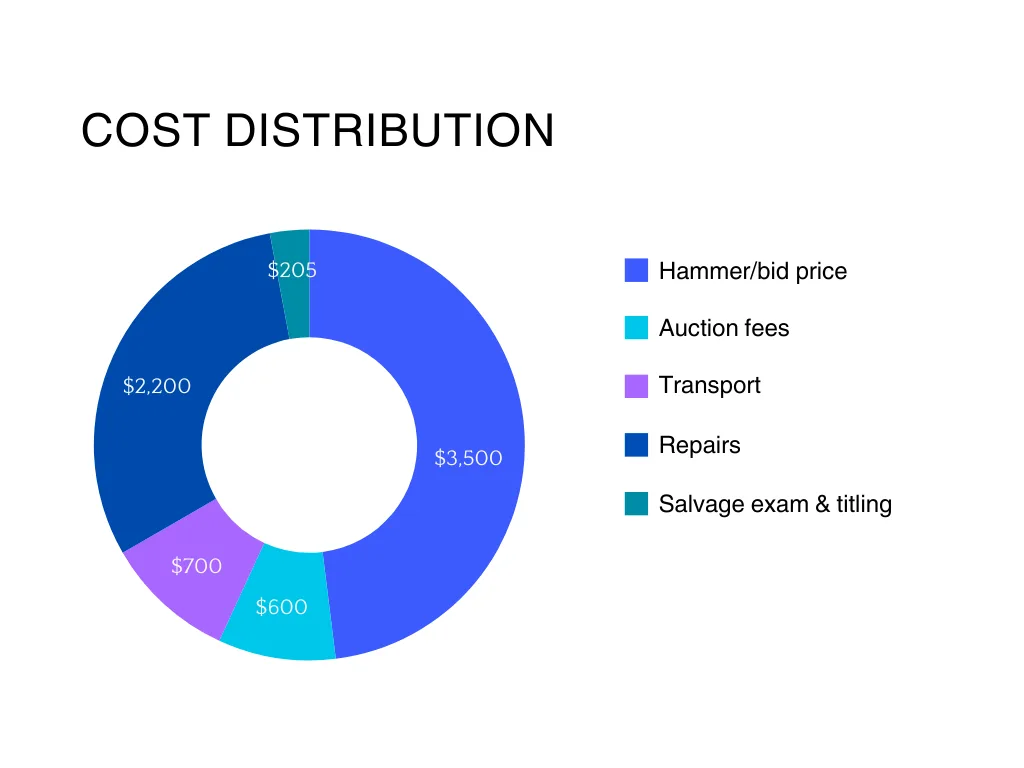
Cost Distribution in New York
New York buyers should consider the total project cost, not only the hammer/bid price. Expenses may include auction fees, towing or transport, title and tax payments, salvage examination fees, and parts and labor.
Example (illustrative only):
| Cost Item | Example |
| Hammer/bid price | $3,500 |
| Auction fees | $600 |
| Transport | $700 |
| Repairs | $2,200 |
| Salvage exam and titling | $205 |
| Estimated total | $7,205 |
How to Approach Bidding in New York
A practical strategy should focus on four areas:
- Confirm the Auction Type
Determine whether the auction is public, surplus, seized, or dealer-only. Public auctions generally state that individual bidders are permitted. - Verify Title Status
Determine salvage vs rebuilt vs parts-only. The title designation affects registration potential and repair feasibility. - Account for Compliance Steps
Plan for salvage examinations, proof of purchase, damage disclosures, and tax or title fees required at each stage. - Plan Repairs and Insurance
Consider who will repair the vehicle, the cost of parts, the insurance implications for rebuilt titles, and the likelihood of long-term ownership versus resale.
FAQs

Do I need a license to bid at New York salvage pools?
At many salvage pools and insurance-loss auctions, yes. Dealer or dismantler licensing is generally required.
Are public buyers allowed at some New York auctions?
Yes. Various impound, surplus, and government auctions allow members of the public to bid.
Can I drive a salvage vehicle home immediately after purchase?
No. A salvage certificate does not authorize legal road use. The vehicle must pass the salvage examination and receive a rebuilt title before registration.
What if the vehicle is non-repairable?
“Parts-only” or non-rebuildable vehicles cannot be registered and should be purchased only for parts or scrap value.
Will a rebuilt title affect resale or insurance?
Generally yes. Rebuilt vehicles often carry lower resale values and may be subject to higher insurance premiums or additional underwriting review.
Key Takeaways
- New York requires salvage certification and rebuilt inspections
- Salvage pools are typically dealer-restricted
- Public auctions exist and have separate participation rules
- Non-repairable units cannot be titled
- Total cost must include compliance, repair, and insurance considerations
Final Thoughts
Bidding at auto auctions in New York can be a productive opportunity for buyers who understand the difference between public auctions, dealer-only environments, and salvage-specific requirements. The state’s salvage and rebuilt processes are detailed but provide a clear legal path to purchasing and registering certain salvage vehicles when all steps are followed correctly.
The key is focusing on more than the hammer/bid price. Between inspection fees, repairs, transport, and insurance considerations, a successful purchase depends on viewing the transaction as a complete project rather than a simple auction victory. By confirming auction type, verifying title status, budgeting realistically, and planning post-sale steps conservatively, buyers can enter New York auctions with confidence and informed expectations.
Sources (accessed December 2025):
- New York State Department of Motor Vehicles
- New York Vehicle and Traffic Law
- New York General Business Law
- Copart New York
- SCA – New York Public Auction Operations
- New York City Department of Finance
- TrialLaw1 – Salvage Title Considerations in New York
Join AutoBidMaster for free — create your account and start bidding on cars, trucks, motorcycles, and more.

- What to Know Before Bidding on Vehicles in Pennsylvania - January 20, 2026
- Most Sought-After Used Car Brands in the USA in Recent Years - January 14, 2026
- Making Sense of Vehicle Bidding in North Carolina - January 14, 2026